Rescuing the Joshua Tree Muse
By Tammy Greenwood
Stiff and ungraceful… the most repulsive tree in the vegetable kingdom. One can scarcely find a term of ugliness that is not apt for this plant.
It’s unimaginable that what is now considered the darling of the desert, the Joshua tree, was once met with such short-sighted snubs as colonizers made their way West.
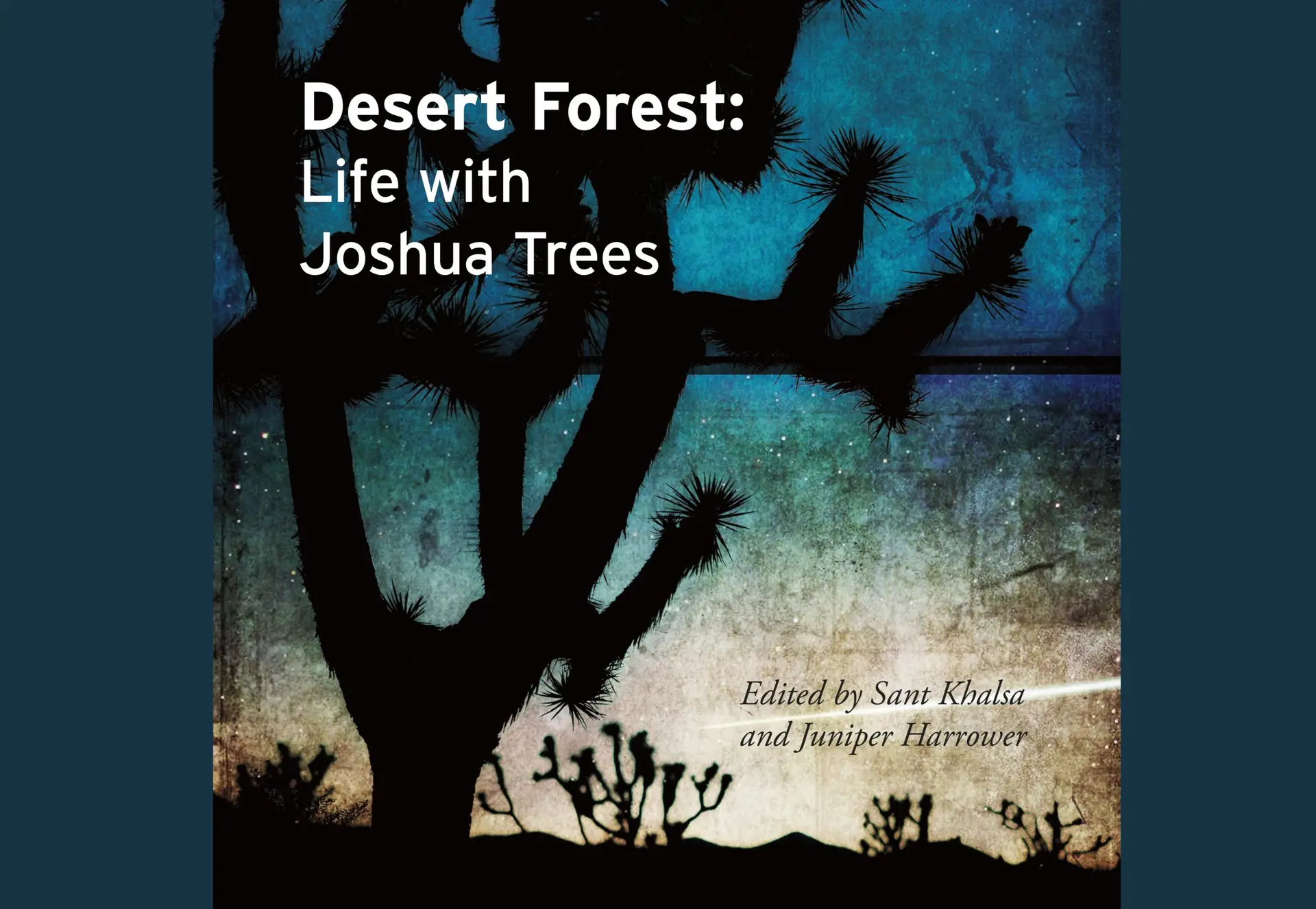
In Desert Forest: Life with Joshua Trees artist/activist Sant Khalsa and ecology expert and artist Dr. Juniper Harrower explores the history of the once maligned Joshua tree, its function as an interdependent species, its rise to iconography, and now, its possible extinction.
Produced by the Getty, MOAH Lancaster, and Inlandia Institute, this 300- page tome weaves together a variety of essays from a range of experts in photography, painting, sculpture, poetry, and scholarly content, and while it reads as a lamentation, MOAH director Andi Campognone’s foreword makes it clear that “this narrative is not solely one of struggle. It is also a vibrant tapestry of resilience, where artists explore themes of restoration, symbiosis, and the enduring power of nature.”
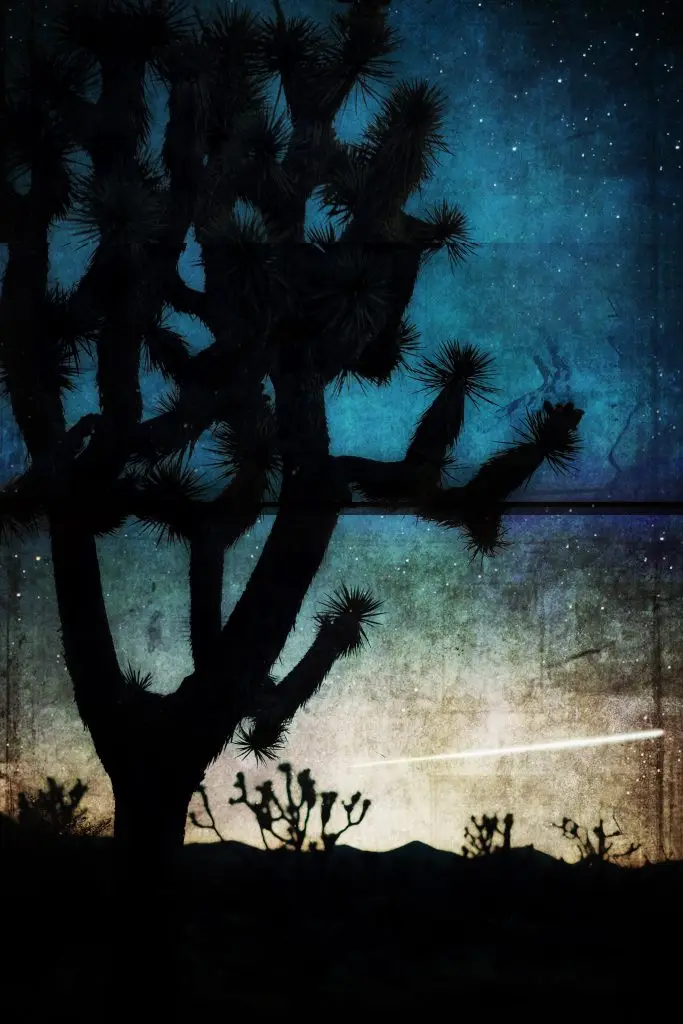
In environmental writer Chris Clarke’s essay, we learn of the first discovery of the yucca tree, as well as its symbiotic relationship to the yucca moth and interdependence with various wildlife. While the first documented photo of the Joshua tree taken in 1880 by Carlton E. Watkins sets the stage for Manifest Destiny, the image could have been taken today and would not look out of place alongside Bill Leigh Brewer’s 2013 “Queen of the Valley.”
Dr. Cane West’s essay recounts the legend of the Joshua tree name being connected to Mormon pioneers in the 1800s who saw in the “outstretched arms of the tree” the prophet Joshua “guiding the Israelites to the Promised Land.”
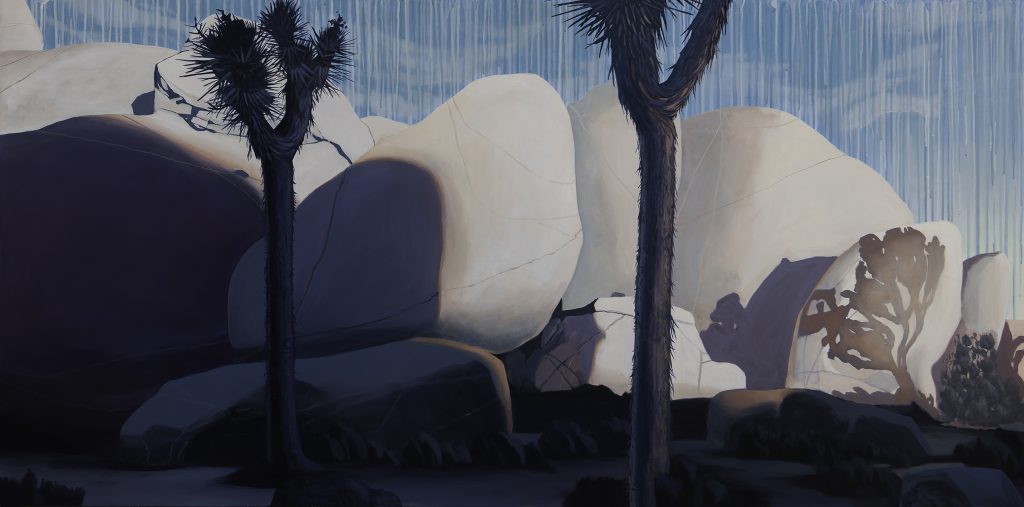
This imagery is likewise depicted in Cara Romero’s cover image, “For the Cahuilla Boys,” as well as Diane Best’s acrylic on canvas “Hidden Dawn,” where even dwarfed by boulders, the Joshua remains center stage, casting its silhouette across anything but desolate backdrops.
Despite its biblical name, the Joshua tree’s cultural history is hardly reverent—early settlers even tried (and failed) to turn it into paper. It was later surrounded by a nuclear testing ground. The haunting imagery connected to this area continues through photographer and essayist Darin Boville’s recounting details surrounding the
area’s largest ecological disaster, the 2020 Dome Fire in which more than a quarter of the Cima Dome Joshua tree forest was lost—an estimated 1.3 million trees— reshaping one of the world’s most important habitats.
Science blends with verse as ecologist Daniel Oren Hastings waxes poetic in his essay with lines such as “I succumbed to the subtle charms of that stark landscape. Plants that could survive in the exterior in the extreme winters seemed much more worthy of wonder than a freeloading raspberry bush in an Edenic meadow.
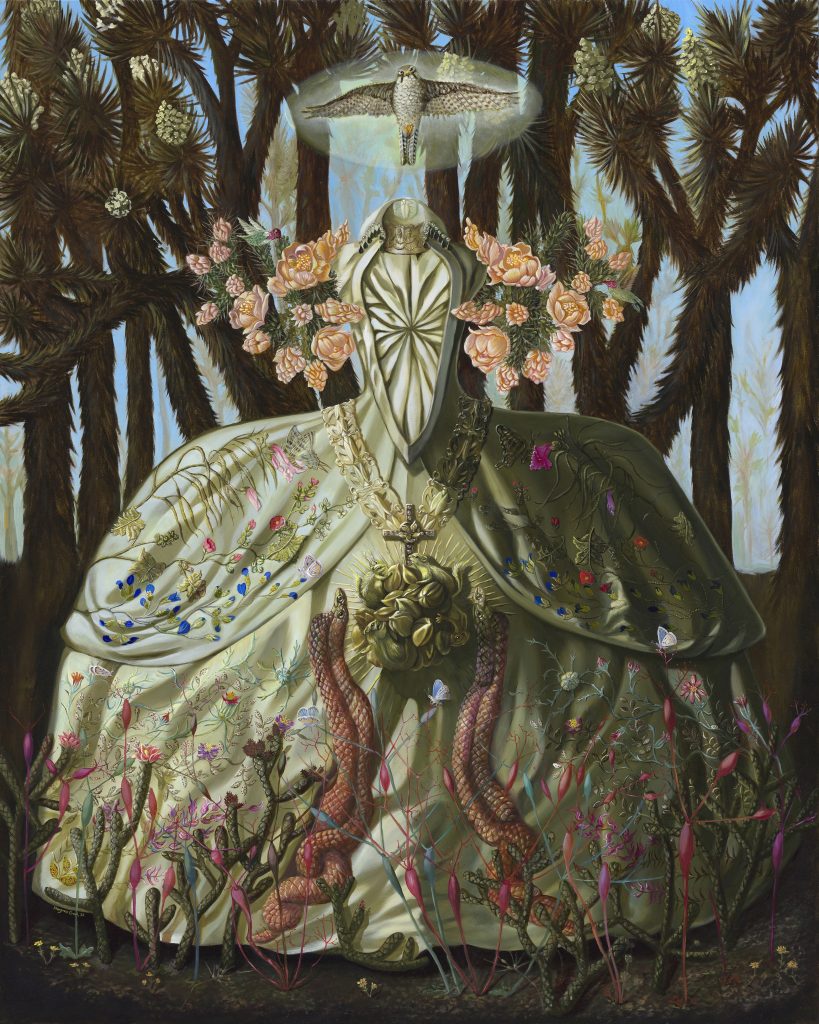
This Eden of the desert depiction is made even more real by Maryrose Crook’s surreal, “Kingdom of the Moth.” We see what transpires when science meets art with the intention of saving a species in Harrower’s interdisciplinary work “Soil to Sky: A Joshua Tree Love Story”, in which she reveals the symbiotic relationship between mycorrhizal fungi. Harrower’s artwork goes further, incorporating Joshua tree seed oil and fibers.
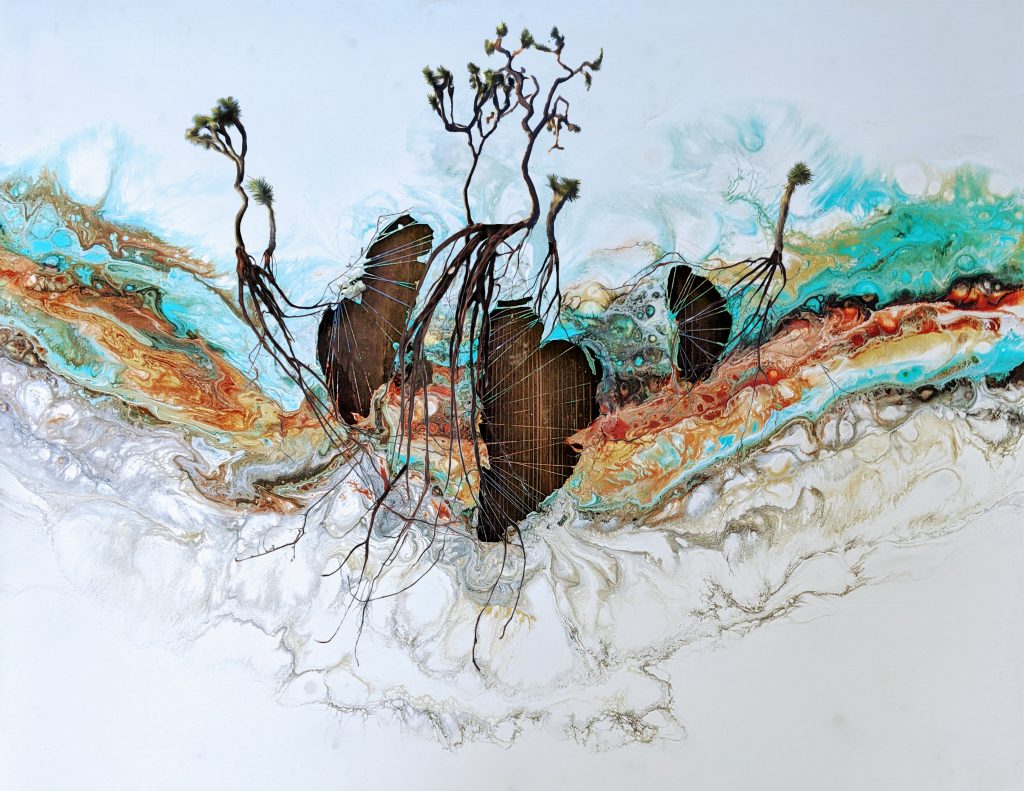
In “Disrupted Symbiosis”, Joshua trees reach into a woven underworld of abstractions that blur the boundaries of where one species ends and another begins. The once-slandered desert tree also famously made its way into iconic art and culture through the U2 album The Joshua Tree in 1987.
Thousands of fans flocked to the desert and literally loved the tree to death, as described by Shana Nys Dambrot: “It had been growing in Death Valley for centuries (because that’s how long it takes each tree to grow), but now it’s dead. There was a plaque, but it’s been removed because people just started hugging nearby trees to death instead.”
It seems fitting that a tree that evolved over millennia would come to symbolize resurrection, resilience, and rebirth—and it still stands as an example of perseverance, in spite of unabated obstacles.
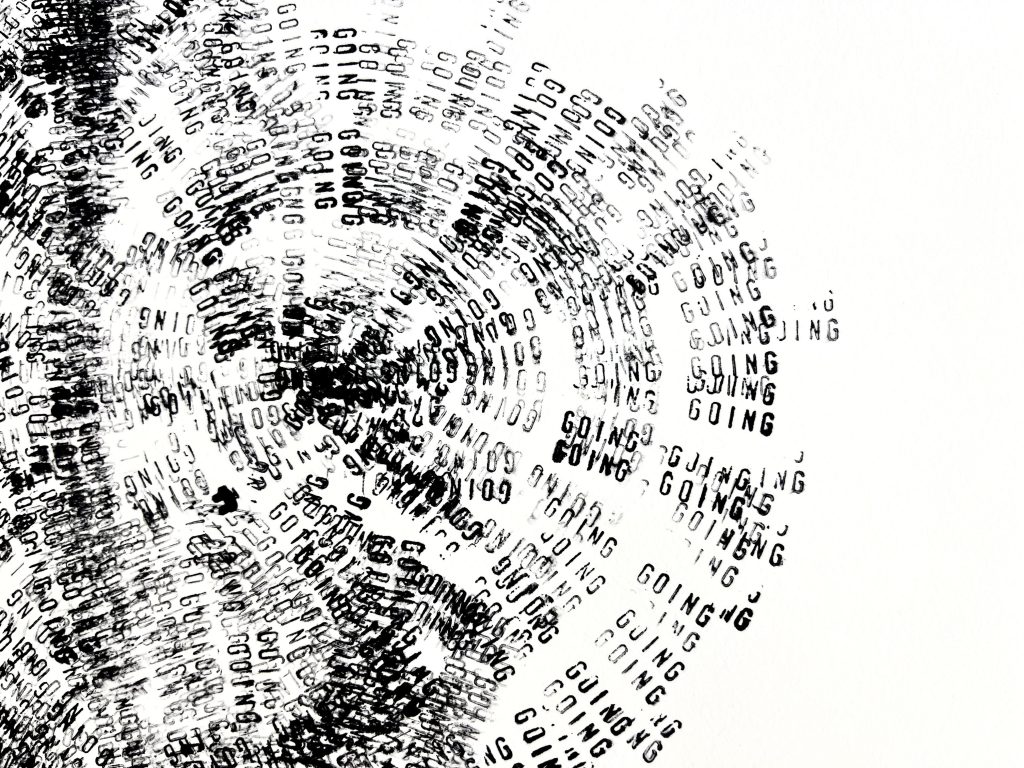
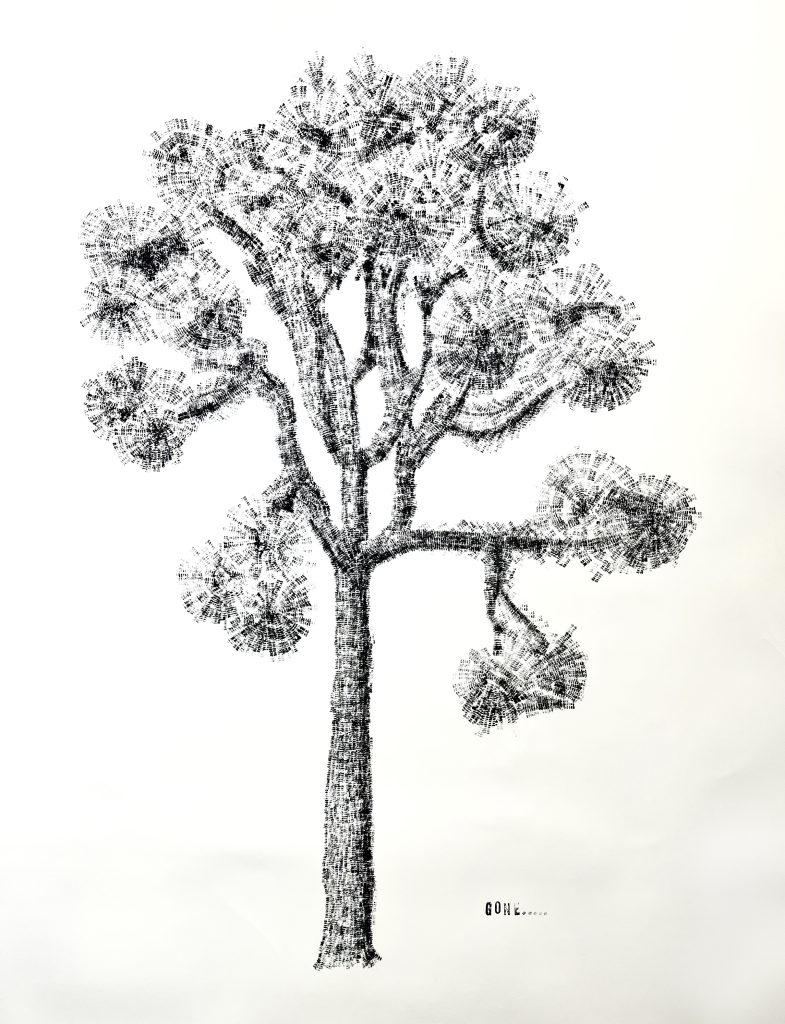
In Gerald Clarke’s dramatic pen and ink work “Going, Going, Gone”, we see what appears to be delicate imagery of a Joshua tree, but upon closer observation, the spikes of its leaves spell out salient warning.
Biologist Dr. Cameron Barrows proclaims the Joshua tree as “the hub of a species wheel, the spokes are the multitude of species that use or depend on the Mojave Desert icons.” This is an apropos description for this collection, reminding us of all the things that are dependent on the Joshua tree, and, if speaking of the spirit, can we include ourselves in this list as well?
Desert Forest: Life with Joshua Trees indicates that we, too, are “spokes in the wheel,” forging us into the fate (or rescue) of this beloved contemporary icon. But, the question remains—will readers be called to action by this tapestry of science, celluloid, acrylic, and myth making, and is it possible to love something to death?