Still Going Strong at 25
By Stacey Solie
If the vibes are right, Chuck Caplinger can intuit a stranger’s zodiac sign, the make and model of their car, and even their name.
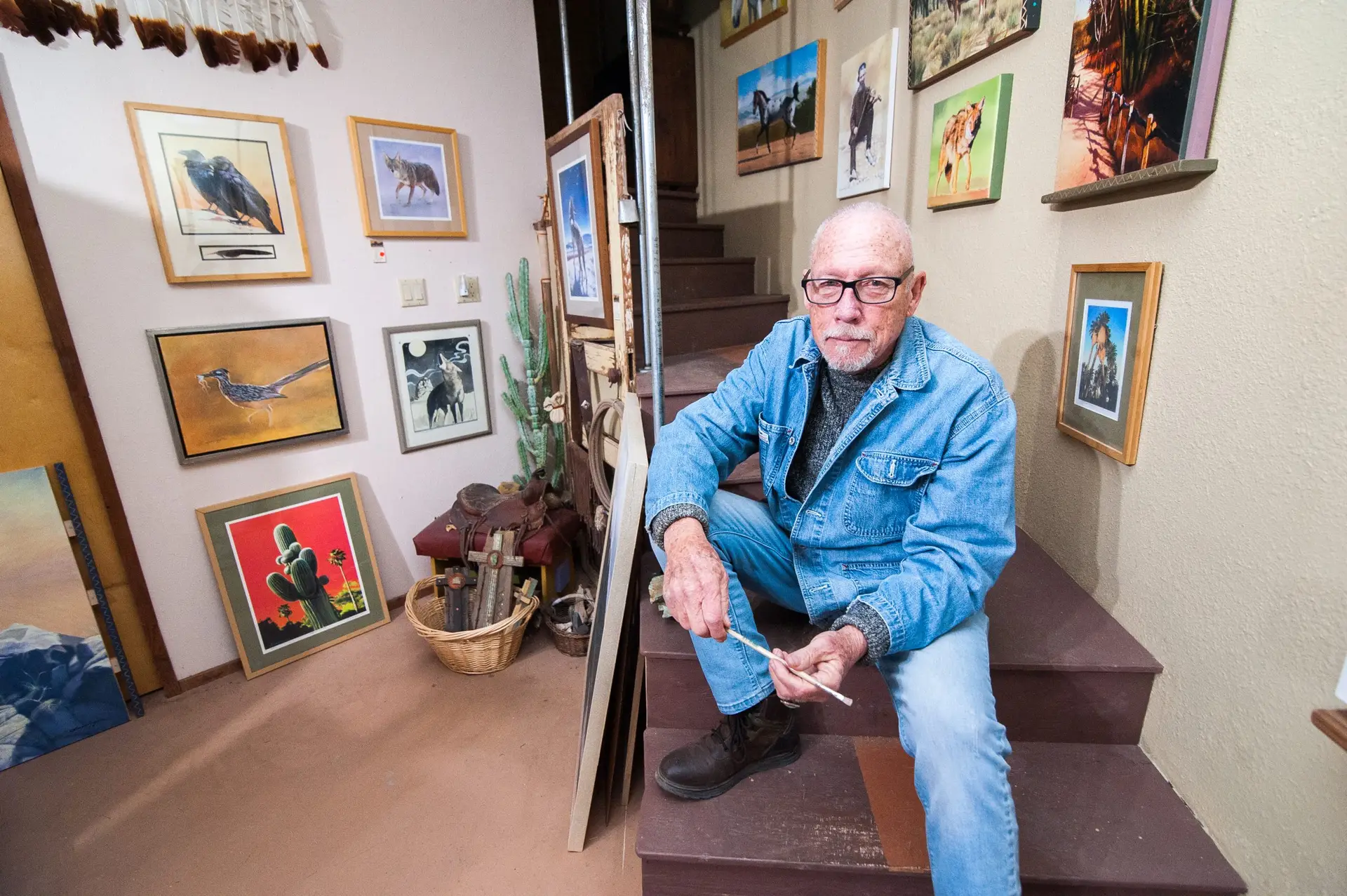
“I’m somewhat of a clairvoyant. Psychic, if you will,” Caplinger told me when I stopped in at his studio to learn about the origins of the Highway 62 Open Studio Art Tours (the “Tours”), now entering their 25th year.
As Caplinger tells it, the seeds for the Tours were planted back in the 1990s, when, during a ride on their Harley, he and partner Holgie Forrester made a pit-stop in Twentynine Palms for coffee. It was during that pause that he foresaw a bit of the future.
“There’s going to be an arts renaissance here,” he recounts saying to Forrester, “and there’s a five-year window of opportunity for me to be involved and make an impact. We’ve got to move here.”
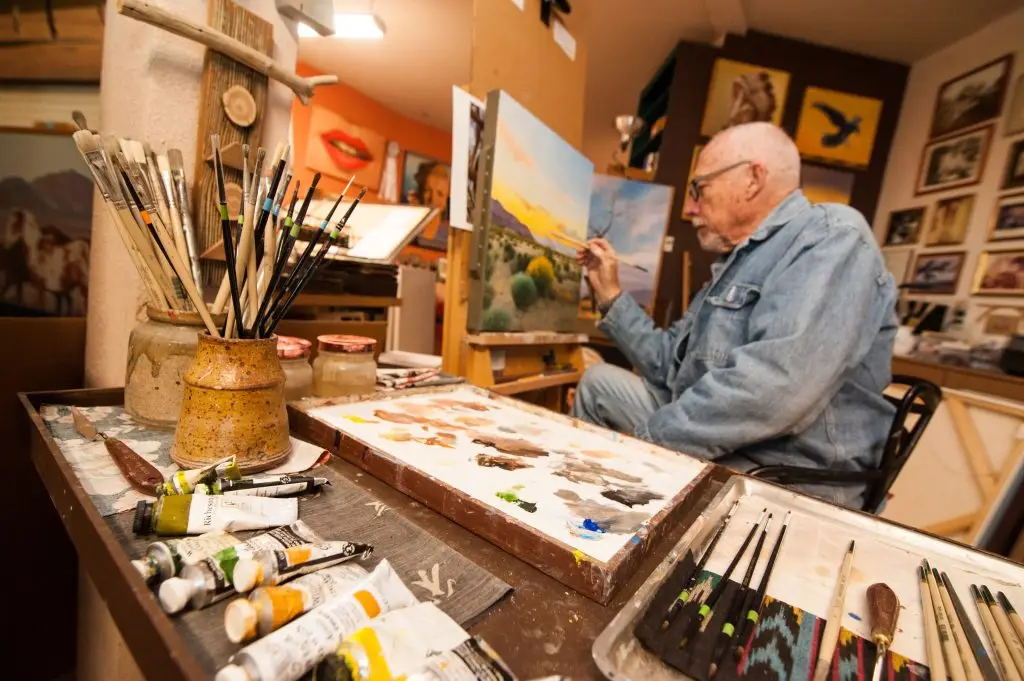
Before long, and like many creatives before and since, the couple left Los Angeles for the Hi-Desert. They bought a home in Twentynine Palms, close enough to LA that Forrester could continue her acting career, and Caplinger set up his studio on the ground floor. He soon joined what was already a vibrant and growing community of artists and went on to co-found the Morongo Basin Cultural Arts Council (MBCAC), the organization that sponsors the Tours.
Where the Magic Happens
The Highway 62 Open Studio Art Tours offer visitors the chance to meet artists where the magic happens. To see the brushes and the kilns, feel the heat coming off the sand, and squint into the sunny desert skies.
The Tours have evolved since their 2001 inaugural year when Lucia Grossberger Morales was in charge. A creator of the Designer’s Toolkit, the 1979 program that let people use a stylus to draw on a graphics tablet, Morales was already a legend. That year, about 20 artists participated, most of them based in Twentynine Palms. Last year, the Tours’ artist headcount surpassed 150, and this year could be even bigger. With studios scattered along a wide corridor–45 miles stretching from Morongo Valley to Wonder Valley–it’s now among the largest open studios tours in the nation.
Pack Food, Get the App
This sprawling presence with its long, sandy roads, sharp rocks, and soft shoulders can make navigating the Tours challenging. While there is no “how-to” guide, a good starting place might be with Other Desert Radio podcaster Alexandra Martinez, who made the trek last September and documented it on her Pequeña Cretina series.
“I feel like with the state of the world right now, getting out to look at art can sometimes feel a little ridiculous, but also really necessary,” Martinez says in the episode as she makes her first stop at the studio of Douglas Blanc and Jillian Sandell. After grabbing a coffee and strolling along a path with sculptural installations made from repurposed materials, Martinez’ hesitancy is gone. “I’m already feeling super inspired and ready to look at more art and really be immersed in it,” she says. She also has some tips.
“Pack food,” Martinez told me. “Don’t think of it like going into the Park, where you need to be survival prepared, but, I need to make sure I can actually process this art by not being super hungry or thirsty.” She also recommends downloading the app. “Using the app and creating the experience for yourself is really important. All these places are super spread apart.”
Connecting to Laughter
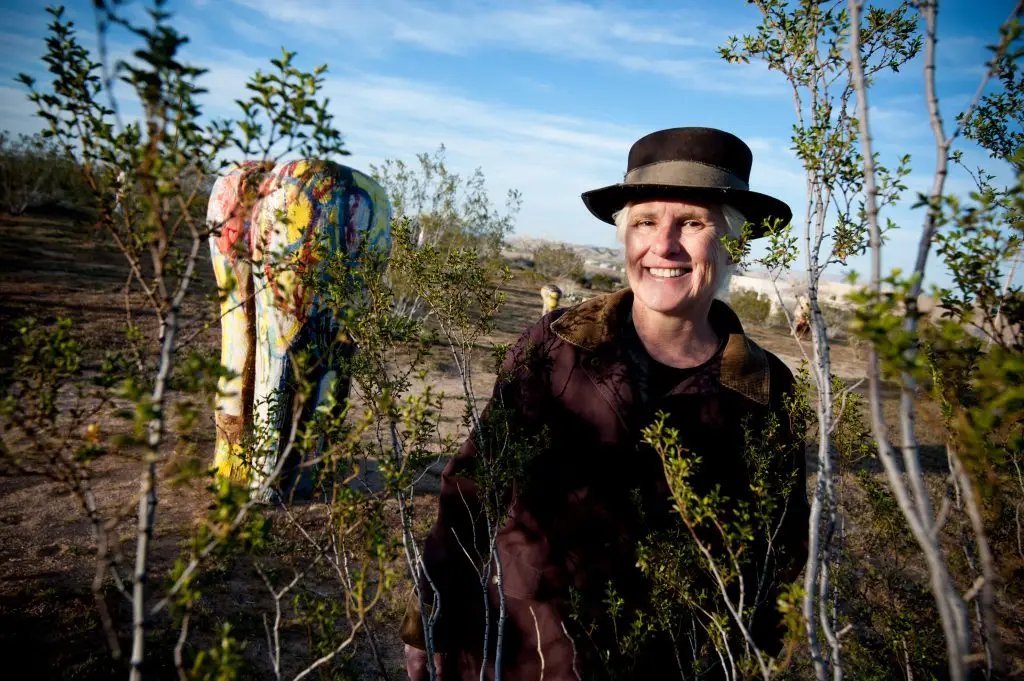
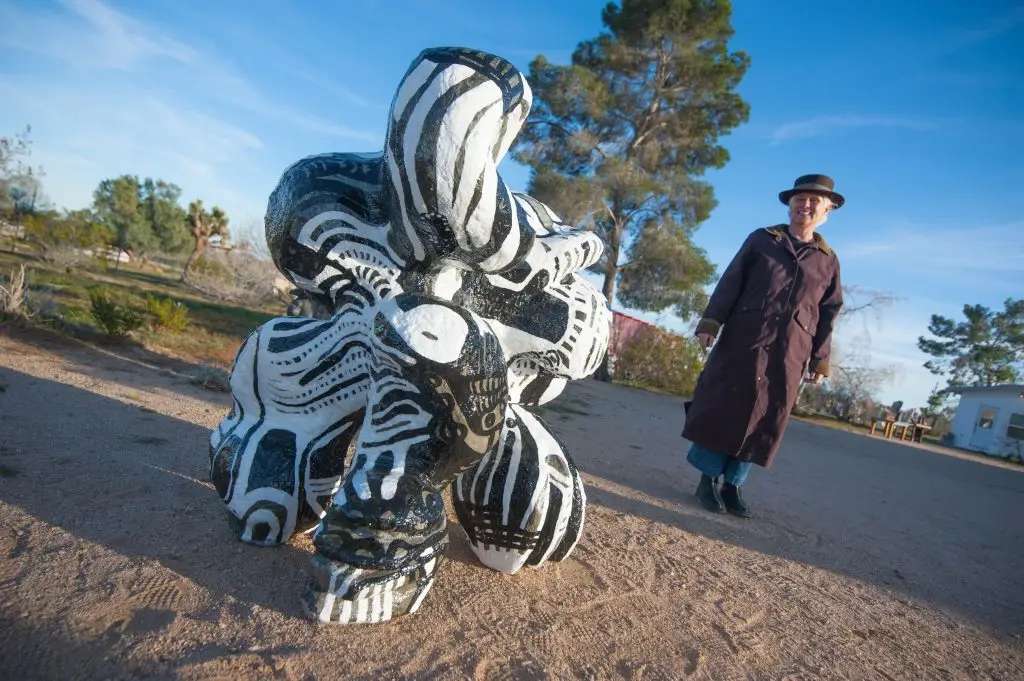
In Landers, Cybele Rowe’s studio makes for an unforgettable stop. Her two-and-a-half acre sculpture garden is populated with dozens of her own chthonic (“underworld”) ceramic creations, positioned amidst the creosote, teddy bear and pencil cholla. Large-scale—some are the size of a baby elephant—these beings pulse with swooping, swerving, inside out energy.
Early in her career at City Art Institute in her native Australia, Rowe and classmates fabricated the vehicles and set pieces for director George Miller’s post-apocalyptic classic Mad Max (1979). While Rowe’s style is entirely her own, something about this connection clocks: the distinctive boldness of the work, the unique vision, the way it seems to have been birthed from the land.
Rowe says she mainly went to art school to use the kilns, and now she offers others the same opportunity: kids who come by during the Tours are sent home with a bag of clay and a jar of glaze, and Rowe even fires their pieces for them. “I’m very connected to the laughterand creativity kids naturally have,” she says.
While she regularly shows at international art fairs in New York, Chicago and other major markets, for Rowe, the Tours are not about the sales, they’re personal. “I’ve had some really good clients who found me through the art tours,” she says, “but I do it because I’m part of the community.”
Good Art Isn’t Always Comfortable Art
Driving from Landers to Yucca onto 62 and then east to Twentynine Palms and then even further east to Wonder Valley entails dropping about 1500ft in elevation. The lower you go, the more the waving armed Joshua trees fall away, the heat kicks up a notch, and the purple Sheep Hole Mountains become the dominant backdrop.
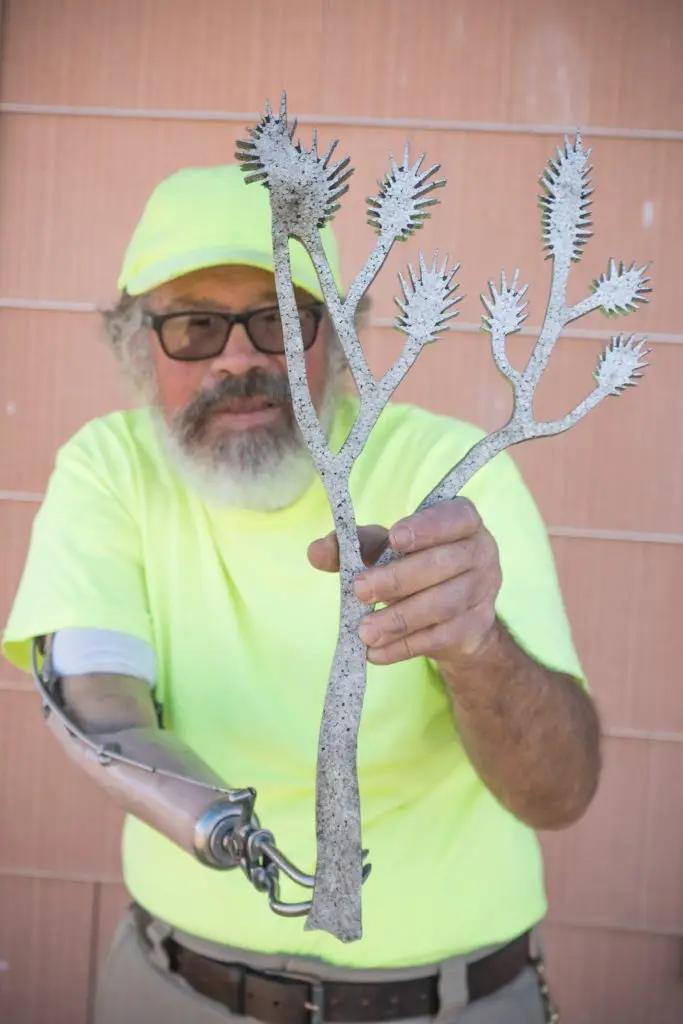
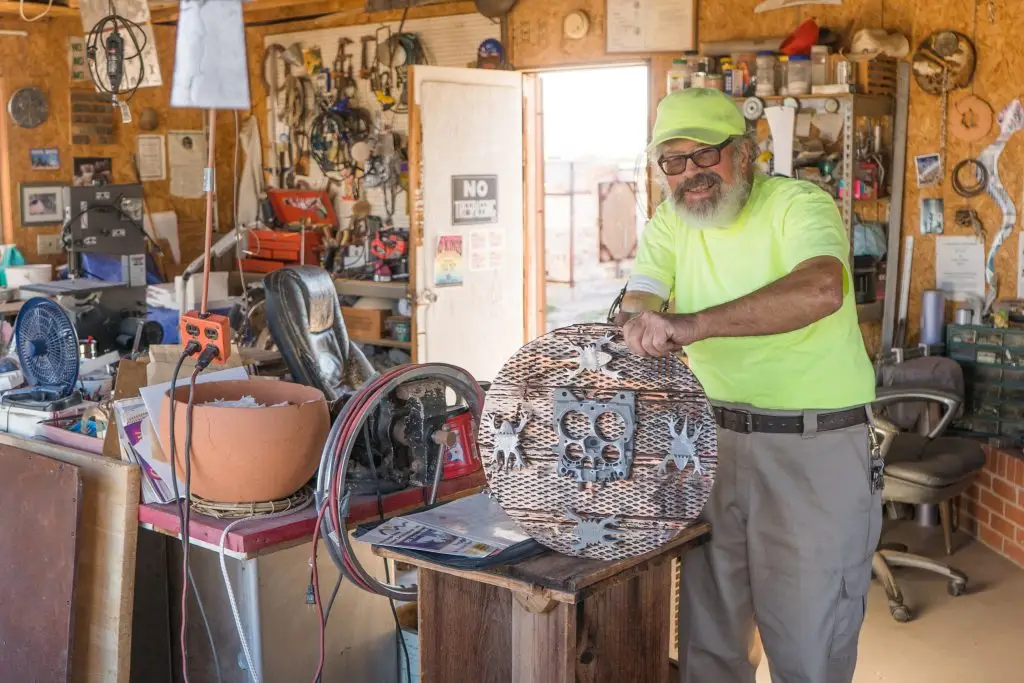
At Mark Heuston’s studio—a pink, solar-powered, one-room cabin off Shadow Mountain Road—many of his works are made from scrap metal such as aluminum discarded by auto manufacturers, or sheet metal that blew in on the wind.
Two rows of Heuston’s signature bells hang from the ceiling, the design inspired by tuning forks, and the breeze prompts the bells to sing to each other in clear, bright tones. Typically inspired by desert life— snakes, tortoises, iguanas—there is also a set of hand-forged shackles on the work bench that Heuston boldly wore at a recent demonstration to make a visual statement against cruelty after he witnessed how immigrants are being treated. “I saw some of the really terrible things they were doing to the immigrants,” he laments. “They were literally putting them into chains and shipping them off.” He felt he had to do something. “Good art is not always comfortable,” he notes
Heuston’s art is his expression, and his studio is his refuge from the world. “The studio is an environment where I’m in charge, I’m in control, and I can get into my zone,” he says. “It’s very centering.”
Patronage, Community and Social Traffic
Gretchen Grunt, a multi-media artist who, for a stint in the mid-2000s, took over primary responsibility for running the Tours recalls some of her early training. “The main thing I learned in art school is that you need to be a part of an art movement, and you need a patron.”
That mid-aught period was a peak time for making a living in the arts, says Grunt, who also teaches classes out of her studio at the Twentynine Palms Creative Center.
“From ’03 until the banks fell apart in ’08, it was a goldmine,” she says. “We were selling so much art it was unbelievable. In 2008, everything fell apart financially. Overnight people just stopped buying art.”
Like all markets, the art markets have had their booms and busts. Compared to other artistic epicenters like Los Angeles and New York City, the Hi-Desert offers artists breathing room. But there are trade-offs.
Caroline Partamian, a sound and visual artist who has lived and worked in New York, the Bay Area, and the Hi-Desert believes the basics are not all that different, noting “there is mutual support between artists, excitement for new ideas being executed and brilliant programming in beautiful spaces.” However, each setting has limitations.
“Obviously, there’s a lot more money in places like New York. Here in San Bernardino County, we’re operating in one of the lowest HPIs in the state,” says Partamian, who also works as the operations director at Compound Gallery in Yucca Valley and Executive Director of DESERTRADE, an artist residency in Twentynine Palms. HPI is the Healthy Places Index, a data and mapping platform for tracking economic, educational, social, transportation, housing, environmental and healthcare resources.
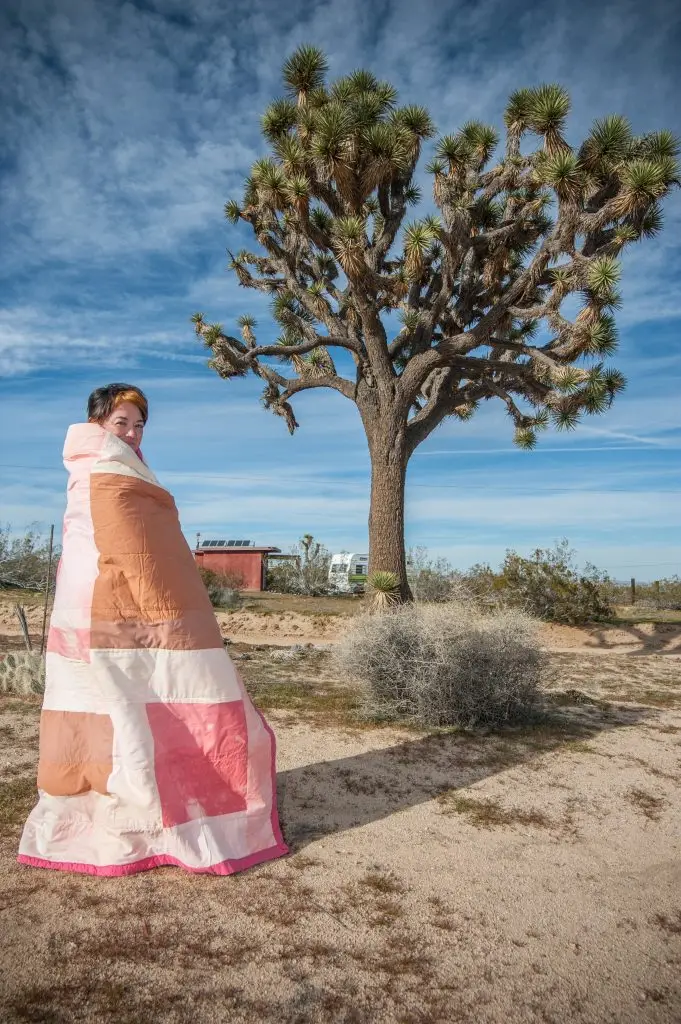
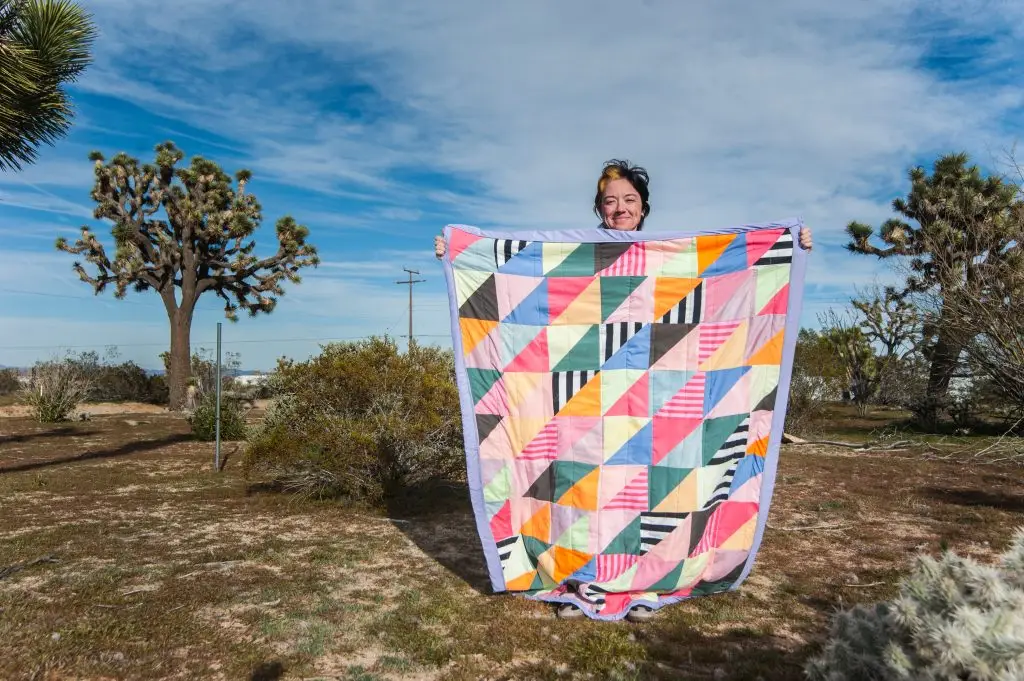
Neapolitan one of their quilted creations.
“It’s also so much more expensive in New York than it is here—space for a studio, space to present work. But out here, our access to social traffic is limited.”
It’s this proliferation of real life, in-person social traffic that the Highway 62 Open Studio Art Tours solves for the Hi-Desert, at least for a few weekends out of the year.
New Discoveries Amid the Silence.
One of the pleasures of the Tours is discovering up and coming artists, such as Panda Landa, a Flamingo Heights textile artist who plans to participate in this years’ tours for the third time, exhibiting a range of work—including quilts, an art form they first started exploring during the pandemic.
For many creatives who are drawn to the desert for the stillness and the absence of crowds, the Art Tours can be overwhelming. Landa estimates that last year, between 60 and 80 people came through their studio each weekend—half local, half from other SoCal cities.
“I’m such an introvert,” Landa says. “I was nervous to open up my studio, but it was worth it because of all the people I got to meet.”