A 25th Anniversary Celebration of HWY 62’s Open Studio Art Tours
by Natasha Brie Beranek
For the first time since 1969, Jim Morrison returned to California’s Hi-Desert. At least in spirit.
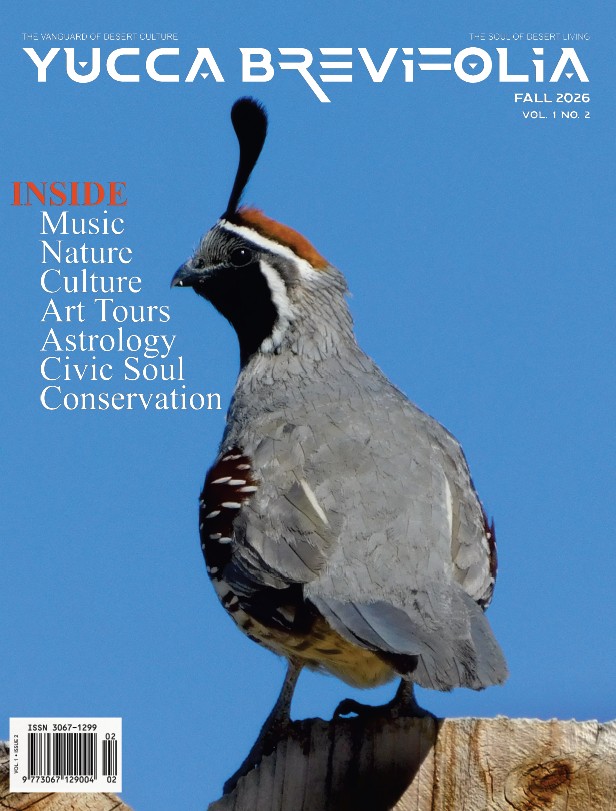
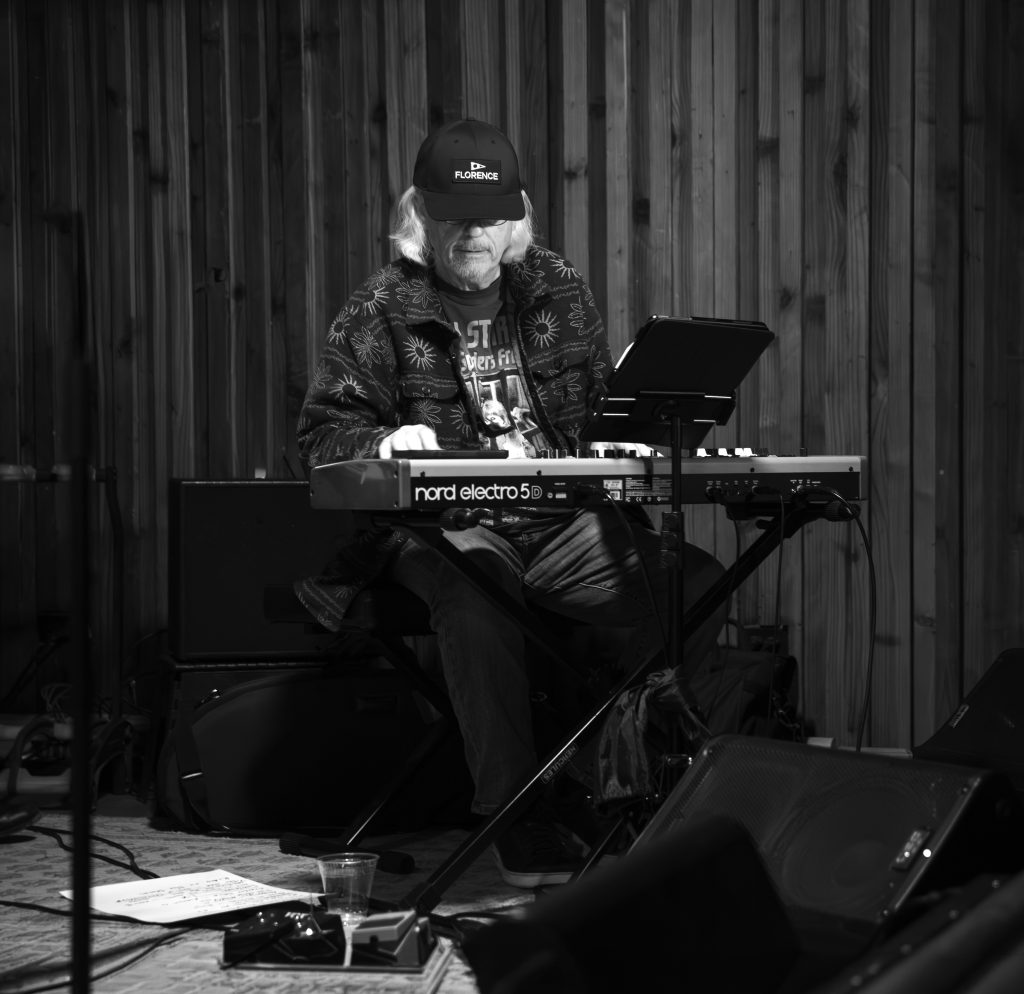
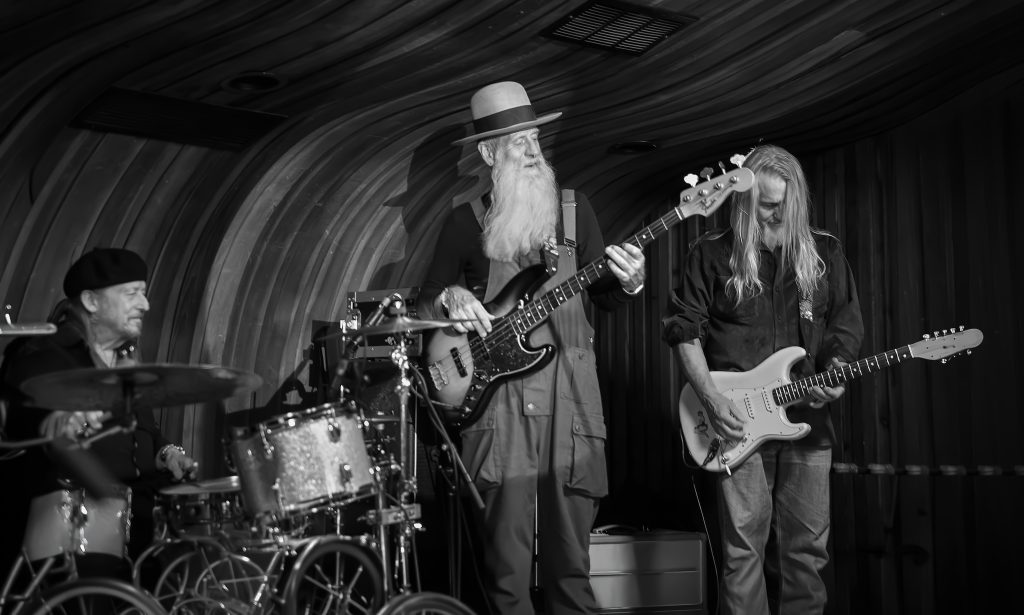
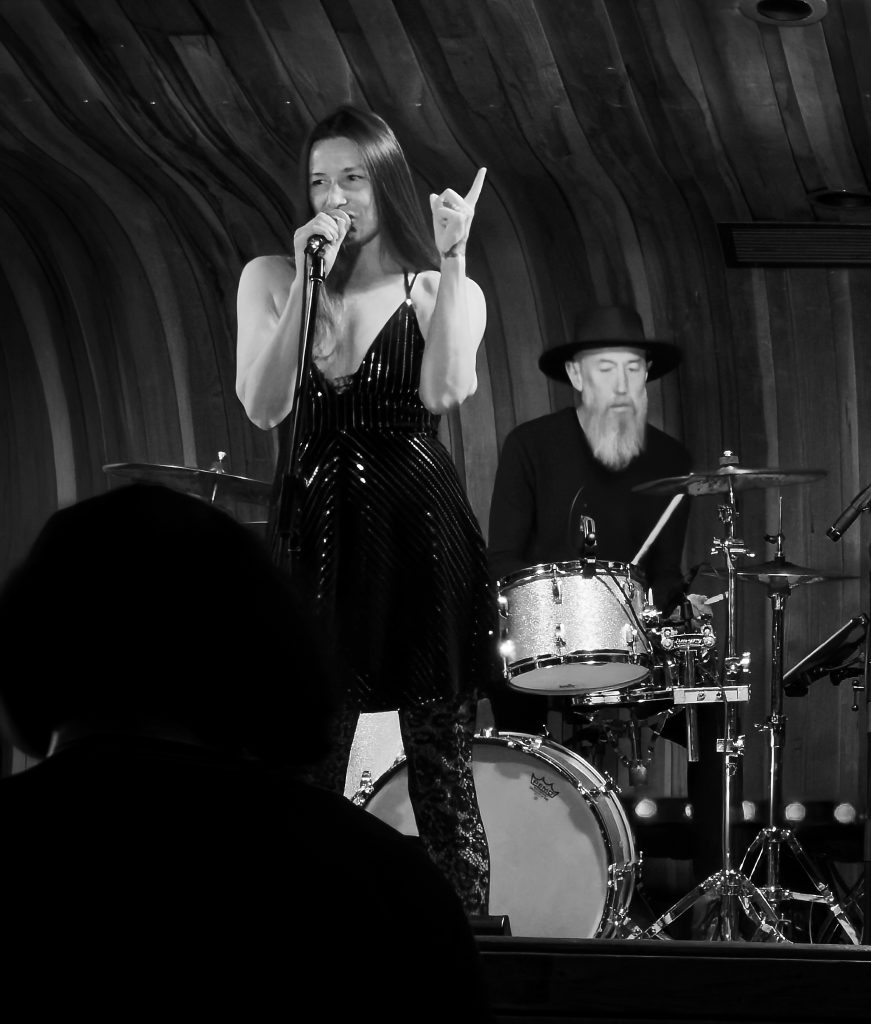
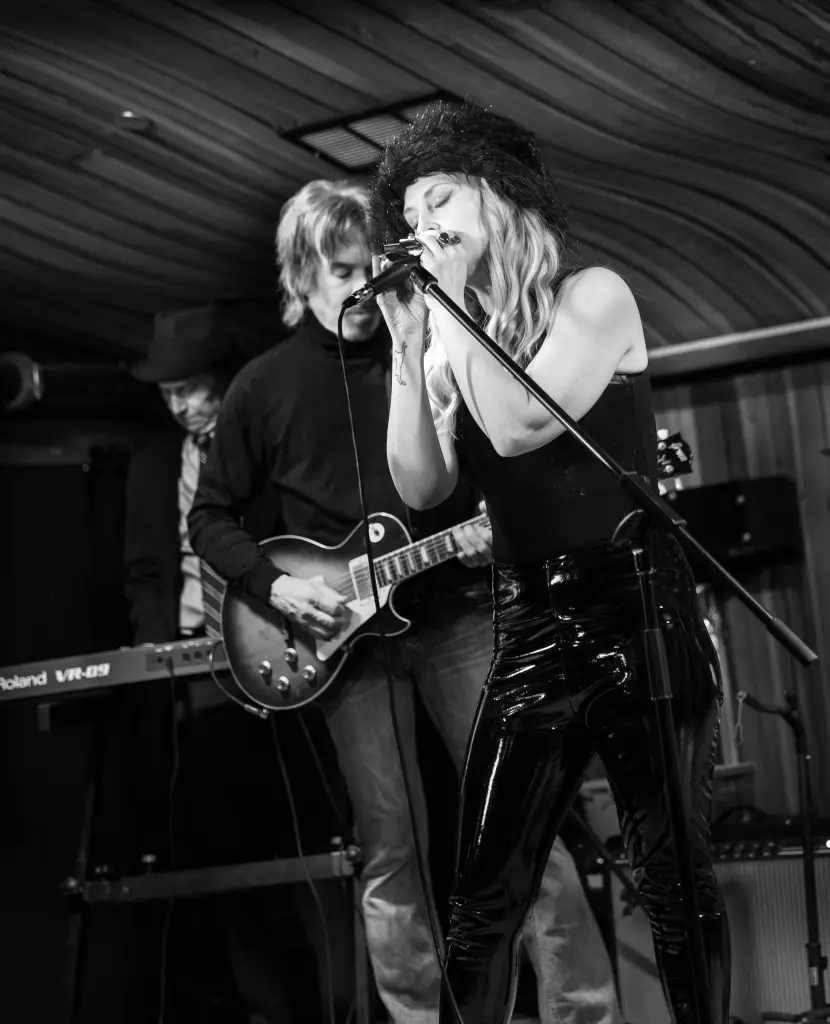
In recognition of the 25th anniversary of the Hwy 62 Open Studio Art Tours, Yucca Brevifolia Magazine and Lisa Schyck, Lisa Rae Black and Natasha Beranek designed The Lizard King Immersive, a multimedia event merging the talents of Joshua Tree artists, held at Mojave Gold on February 18th. Featuring regional musicians’ renditions of The Doors, selected readings of Jim Morrison’s poetry, and original art by Patrick Hasson., many of the Hi-Desert’s most talented musicians sonically fueled the evening, including: Los Poncho Tones’ Jon Ossman (bass) and Denny Weston (drums), Paul Forrester and Robert Garson (guitar), Bobby Furgo and DJ Gray (piano), and backing vocals by The Blue Ladies. Produced by Lisa Rae Black and organized by Black and JT City Limits Presents, sponsors included Juniper Arts, the Joshua Tree National Park Association and 3M Studios,, with 50 percent of ticket proceeds benefitting the continuation of MBCAC’s Art Tours.
Jim Morrison wrote, “Real poetry doesn’t say anything, it just ticks off all possibilities. Opens all doors. You can walk through any one that suits you.” It offers lines of escape from the limited ways in which we see and feel. Like many of this region’s creatives, Morrison experienced the desert as poetry, as a catalyst for transforming the most intangible elements of life into their chosen art form.
As the narrator of “The Lizard King Immersive,” I, in collaboration with JT City Limits Lisa Rae Black and Lisa Schyck , could think of no more fitting way to celebrate Open Studio Art Tour’s 25th anniversary than to pay tribute to Hi-Desert artists through a musical gathering grounded in Morrison’s transfiguring ethos.
It’s Time for the Desert Wild
In the canon of American music history, The Doors are thought of as quintessentially LA, a rock quartet whose members coalesced in mid-60s Venice Beach, played in clubs along the Sunset Strip, and broke bread with Laurel Canyon contemporaries such as Joni Mitchell, Mama Cass Elliot, and Frank Zappa. But Morrison’s profound connection to the desert and the American Southwest is much less explored.
Indians scattered on dawn’s highway bleeding
Ghosts crowded the young child’s fragile eggshell mind
Morrison’s belief that he became possessed by the spirit of a shaman in the New Mexico desert as a 4-year-old was, in his words, “the most important moment of my life.” It set the stage for his approach to creativity—relentlessly pushing himself to the edge— and his mission to heal others through musical ritual. The desert, as well as coyotes, snakes and lizards, are recurring motifs throughout his writing, representing freedom, primal and untamed forces, and spiritual potency. His poetry carries a strong sense of place with “the city” as a location to escape from and “the desert” as a source (albeit a precarious one) of emancipation and enlightenment.
The screaming maggot
Group-grope called life
It’s time for the desert wild
Morrison further invoked these images and themes in his 1969 film, HWY: An American Pastoral, portions of which were shot in Joshua Tree. Many desert scenes from HWY, most notably those featuring Morrison driving through Joshua Tree National Park in his light blue 1967 Shelby GT500, more recently gained widespread visibility in the 2009 Johnny Depp-narrated documentary When You’re Strange, which won a Grammy for Best Long Form Video in 2011.
HWY, a film that Morrison described as “more poetic” than carrying a storyline in a traditional sense, follows a hitchhiker (played by Morrison) from Tahquitz Canyon in Palm Springs along Highway 74 in Coachella Valley up through the mountain into the Hi-Desert before driving west back to Los Angeles. Like Morrison’s hitchhiker, the film meanders without any apparent goal. In one scene, he dances and sings with young children, while in another he peruses a rack of paperback novels in a gas station. He kneels on the side of the nighttime highway, passing a diving rod over a map, seemingly seeking guidance on his next movements. He stops to watch an injured coyote lying on the side of the road (a parallel to the fear a young Jim felt when he observed dying Native Americans from his parents’ car).
The Lizard King Immersive
Is everybody in?
The ceremony is about to begin
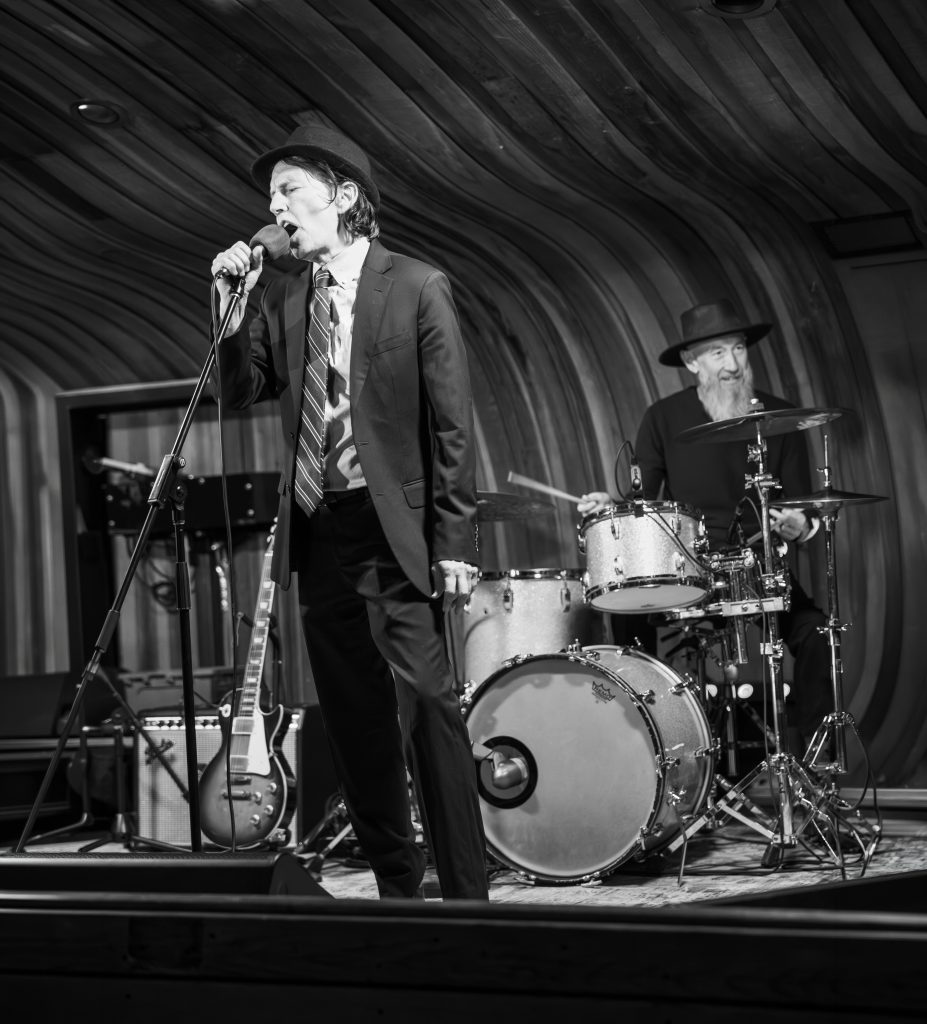
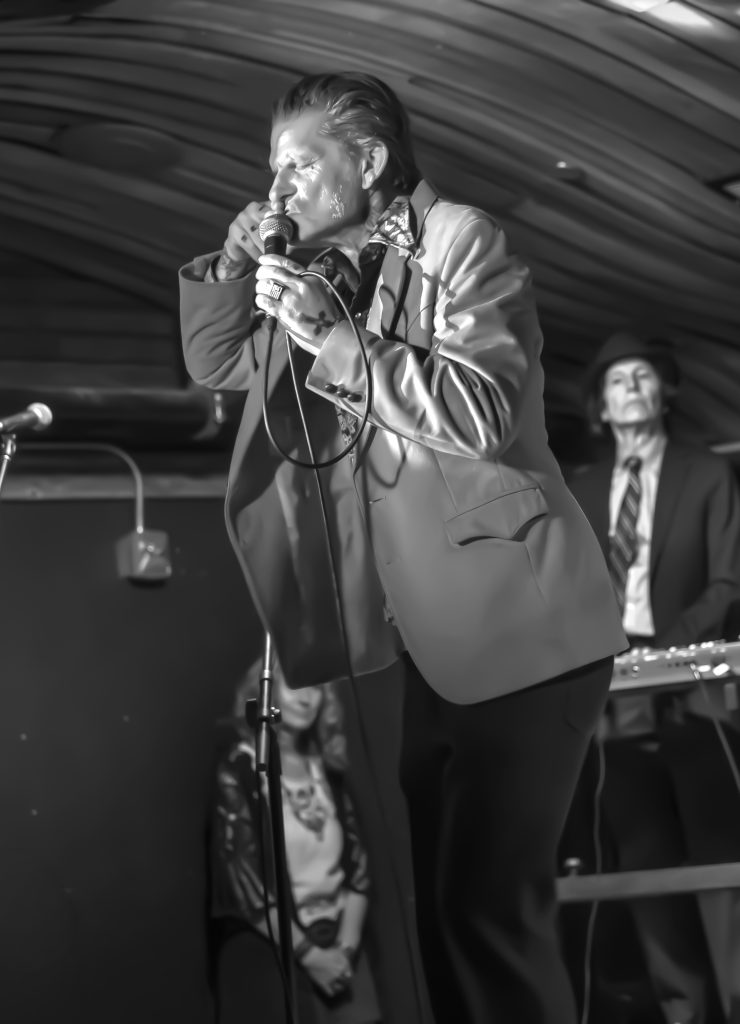
Lisa Moncure’s silky vocal rendition of “Light My Fire,” accompanied by Bobby Furgo on keys, launched the evening, a placid and dreamlike start belying the acoustic intensity that would shortly follow. Against projected background magery of The Doors’ frontman, Dr. Natasha Beranek initiated the poetry reading, laying the foundation for the gathering’s narrative themes: Jim Morrison’s creative and philosophical worldview, his shamanistic role in rock music ritual, his commitment to personal autonomy at all costs, and his spiritual connection to the desert.
What are you doing here?
What do you want? Is it music?
We can play music
But you want more
You want something and someone new.
You want ecstasy
Desire and dreams …
Let’s recreate the world
The palace of conception is burning
Liesl Clouse/Madame Harlequin commanded the room with her thunderous version of “The Changeling”—the opening track of The Doors’ final album LA Woman (1971), which was a stylistic departure, bringing a rather James Brown-esque, funk element to their previously predominately psychedelic catalog. The song is a declaration of Morrison’s lone wolf status and his desire to evolve and cast off the shackles of rock stardom,his strident rejection of adhering to any one persona.
Next was “Shaman’s Blues” (from The Soft Parade, 1969), a waltzy, jazz-rock exploration of Morrison’s solitary shamanistic path. Robert Garson’s rich vocals carried “My Eyes Have Seen You” (Strange Days, 1967) ,one of The Doors’ shortest songs, a frenzied, parlour piano-driven jaunt through Morrison’s voyeuristic line of sight as he gazes on a city under television skies from a rooftop in Venice Beach. What at first pass appears to be a song about obsession and longing from afar is actually Morrison’s lyrical snapshot of a topic he explored at length as a UCLA film student: the socio-psychologically pacifying role of cinema.
The Lords appease us with images.
Through art they confuse
us and blind us to our enslavement [. . . ]
There are no longer ‘dancers,’ the possessed.
The cleavage of men into actor and spectators
is the central fact of our time [. . . ]
We have been metamorphosed from a mad
body dancing on hillsides, to a pair of eyes
staring in the dark
What did “breaking through” mean to Morrison? It’s a restless search for portals of escape so that we may transcend the limiting social scripts that we’ve been taught by authority figures and social institutions.“Morrison,” Beranek states, “saw Doors’ concerts as a way to spark reflection in his audiences.” As Morrison explained, “It was never really an act, those so-called performances. It was a life-and death thing; an attempt to communicate, to involve many people in a private world of thought.”
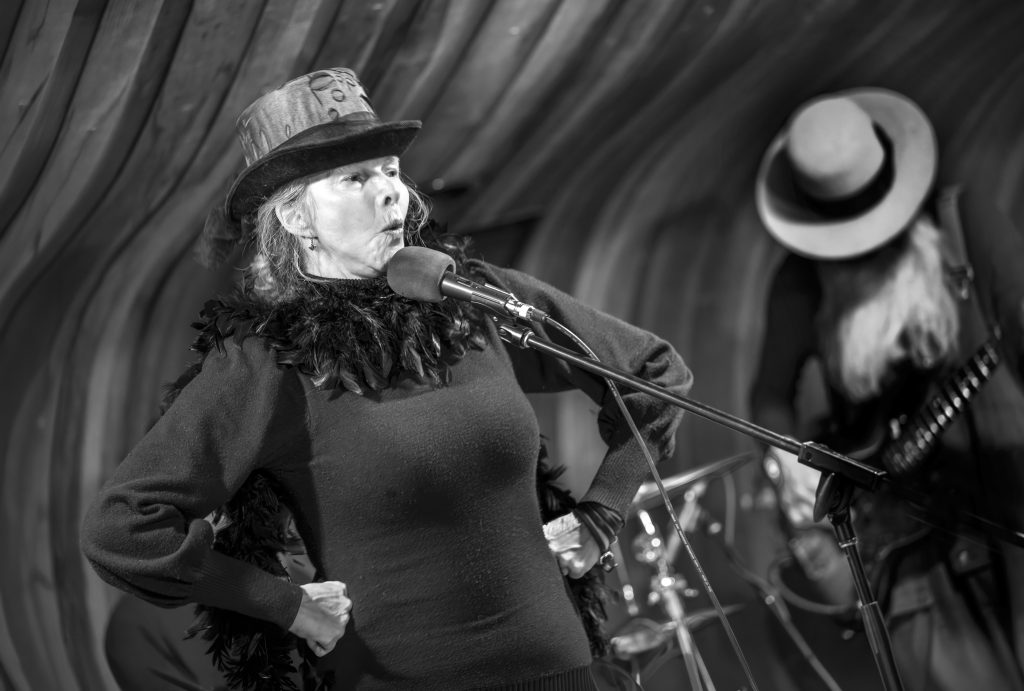
Following Bingo Ritchie’s vocals on “Break on Through,” Lisa Moncure and the Blue Ladies launched a woman-led interpretation of “Alabama Song (Whisky Bar),” both of which were originally tracks on The Doors’ eponymous 1967 debut album. Robert Garson returned to the mic for “Love Her Madly,” followed by a piano-only version of the Baroque pop-influenced “Love Street” (Waiting for the Sun, 1968) performed by DJ Gray. Garson closed out the second set with “The Crystal Ship,” one of The Doors’ most ethereal ballads.
Beranek set up the evening’s third act by invoking eerie imagery from one of Morrison’s darker spoken word poems about a murderous desert traveler from An American Prayer (1978).
The hitchhiker stood by the side of the road
& levelled his thumb in the
Calm calculus of reason
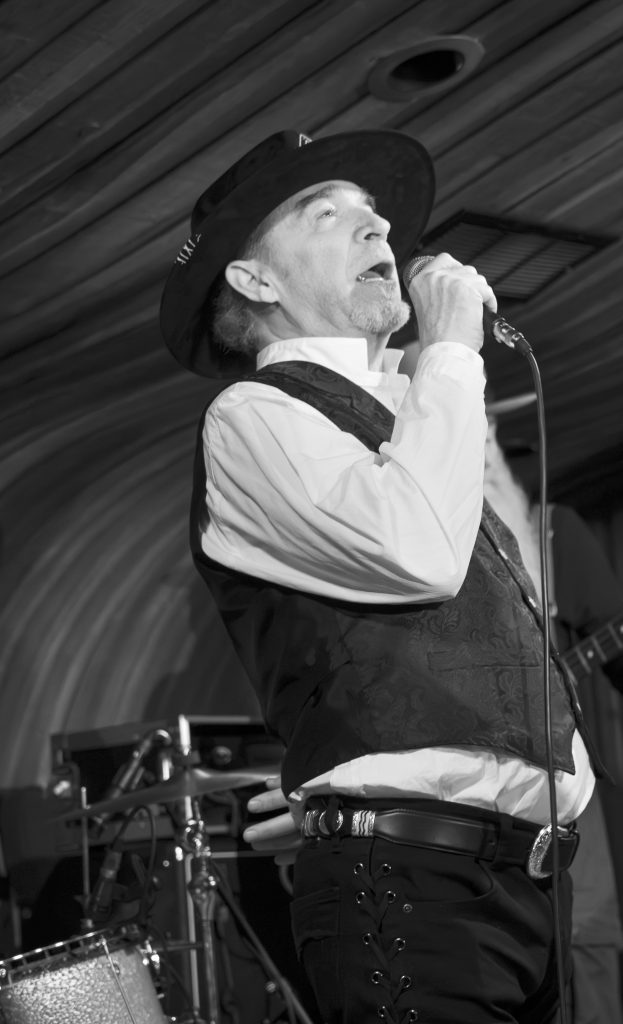
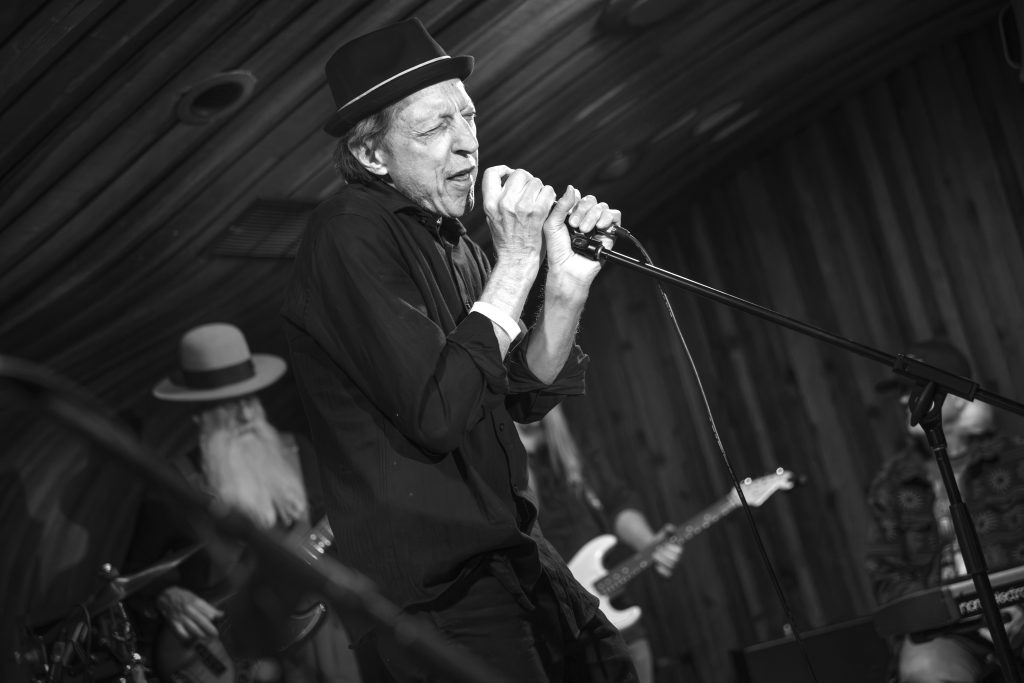
Listening to Kevin Bone’s vocals on “Not to Touch the Earth” (originally part of an extended performance piece by The Doors called “Celebration of the Lizard”) was a trippy, sonically surreal ride. A tale about a primal, powerful desert figure who operates outside of conventional reality, it was the avant-garde jewel of the evening. “Queen of the Hi-Desert” Jesika Von Rabbit was up next with “Waiting for the Sun,” an initially gentle, but increasingly impassioned plea for spiritual rebirth and better times ahead.
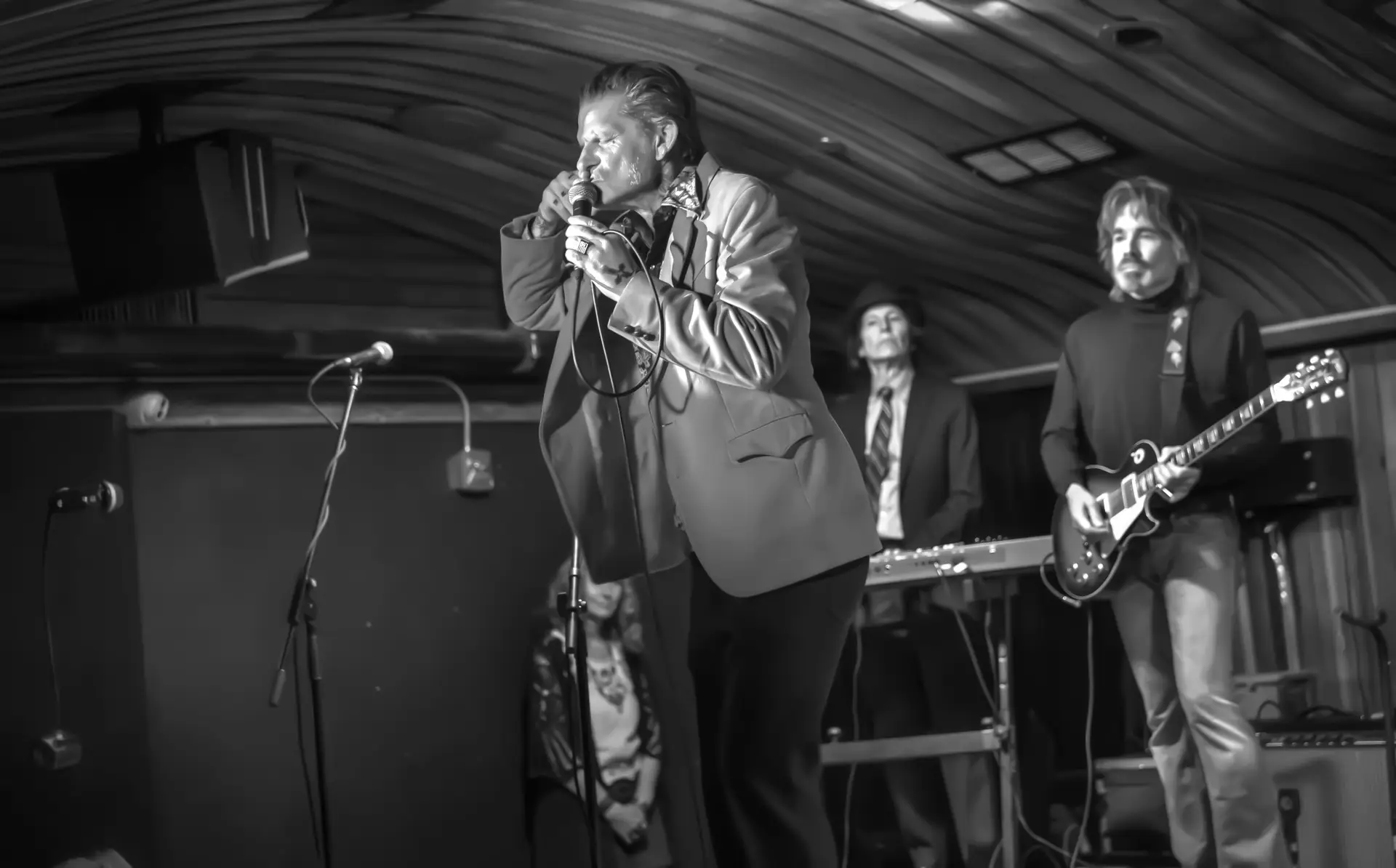
Beranek’s final trip to the mic was an entry to the evening’s concluding set: “The End” (performed by charismatic desert rock mainstay and spoken word Svengali, Sean Wheeler) and the atmospheric “Riders on the Storm” (vocals by Brad Parker).
After 4 yrs. I’m left w/a
mind like a fuzzy hammer [ . . .]
The joy of performing has
Ended [. . . ]
Which of my cellves
will be remember’d
Good-bye America
I loved you
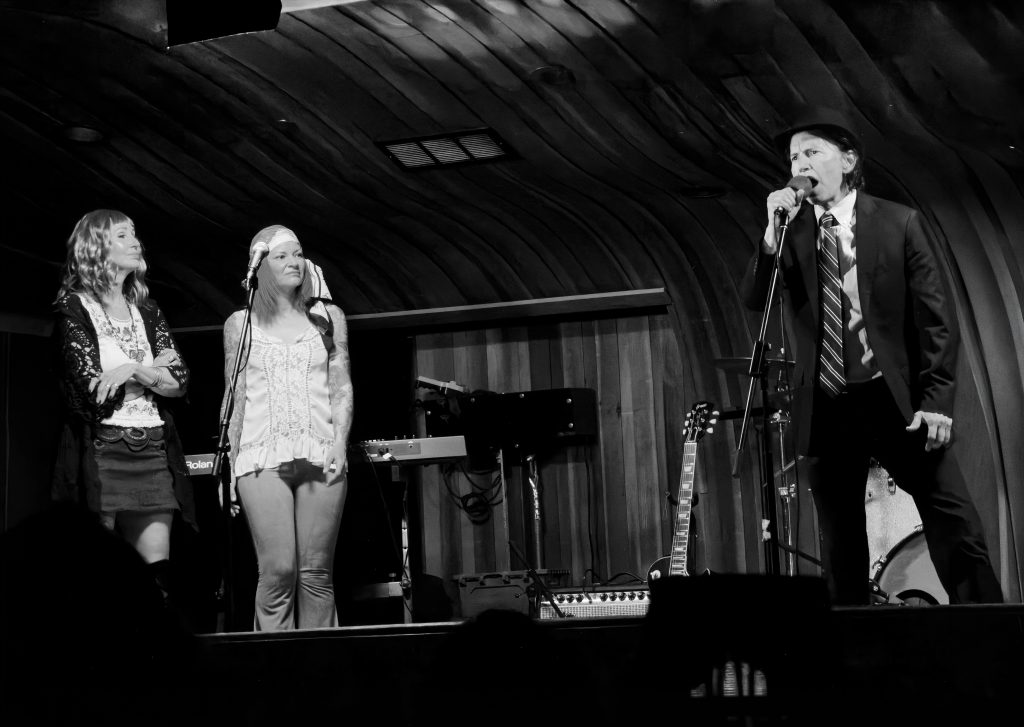
“Jim spent the final months of his life in Paris, returning to poetry,” Beranek told the crowd. “The last letter he wrote, a postcard to his lawyer, featured a desert scene from Morocco where he and his girlfriend Pamela Courson had just visited. It is fitting,” Beranek reflected, “that the desert was the alpha and omega of Morrison’s life.”
A Strange Kinship
Car stopped in a clearing,
Ribbon of life, it was nearing.
I saw the boy break out of his skin.
My heart turned over and I crawled in.
Patti Smith, herself a devotee of California’s Hi-Desert, always felt a creative bond with Doors’ frontman Jim Morrison. On Horses’ “Break It Up” (1975), Smith recounts a dream she had of Morrison as a winged, Prometheus-like figure, fused to a slab of marble and struggling to liberate himself. When the stone dissolves and Morrison flees, she expresses her yearning to achieve a proximity to Morrison, something she could only achieve through encounters with his poetry and performance. On Wave (1979), Smith further explored Morrison’s impact on her work through “Dancing Barefoot.” The song is an ode to the liminal space between male and female power, their love for each other, as well as their mutual love for the Creator.
She is re-creation
She, intoxicated by Thee
She has the slow sensation that
He is levitating with she
Smith first saw Morrison perform in 1967. Speaking to her inexplicable affinity with Morrison, she says, “You have to figure – I was just a girl from South Jersey working in a bookstore. . . Of course I admired [him] . . . Jim Morrison was one of our great poets and unique performers. His work will always endure.”