By Stacy Davies
Joshua Tree composer Natasha Marin’s cycle of life—owls included
Music is connection. It doesn’t matter what human creates it, which part of the world it comes from, or whether it was heard by three people or three million, music builds bridges. It can also offer us glimpses into other worlds, as well as the realization that we are more alike than we are different.
In fact, in Dr. Natasha Marin’s academic paper The Role of the Comparative Method in a Global Approach to Music and Music Education, she writes “…music education of any genre or tradition [is] part of a field unifying us as one global race [and] allows us to consider all musical traditions as equally valuable contributions to human culture and view their diversity as a testament to our ingenuity.”
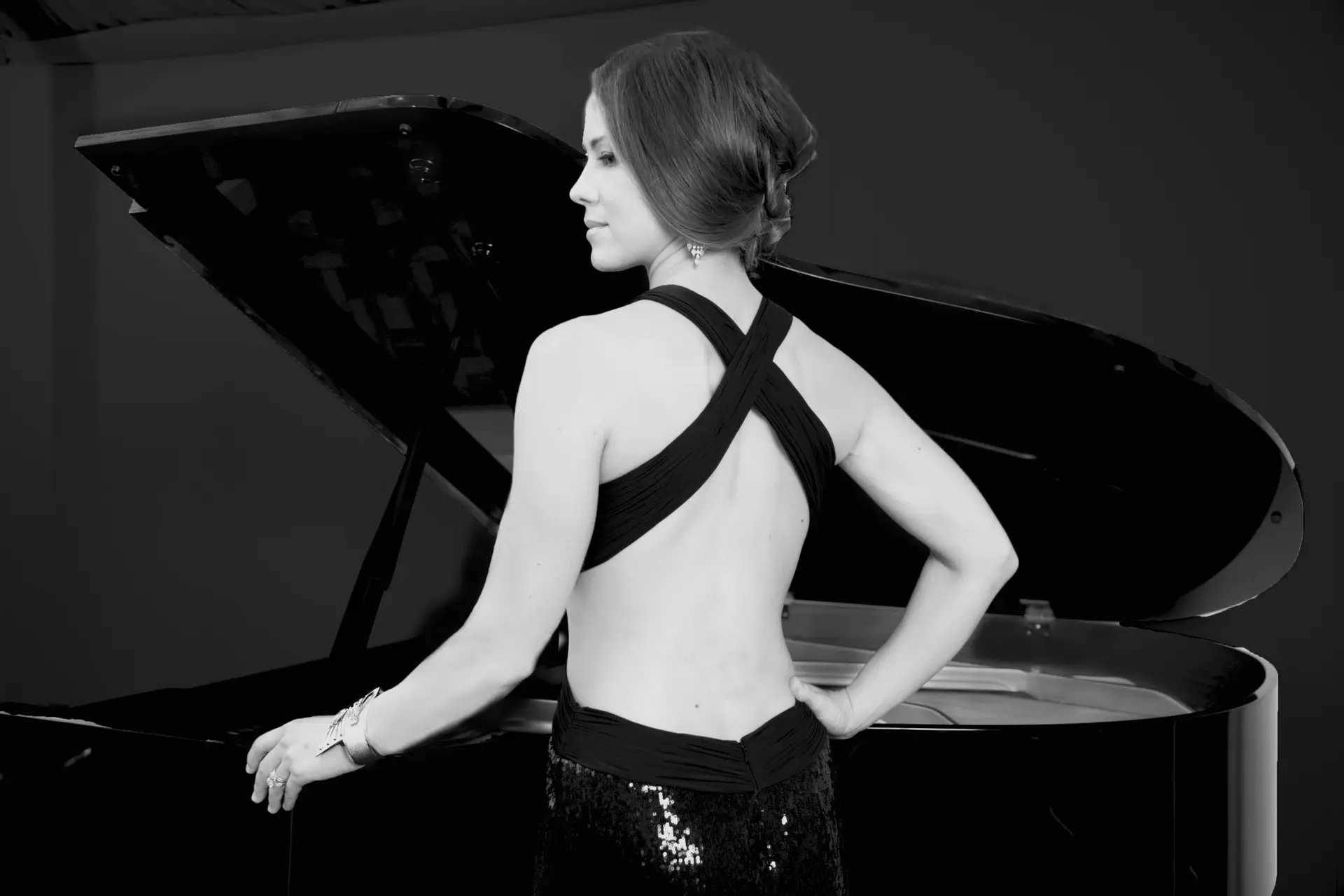
This sentiment, along with the ideals of equity and accessibility, is a foundational part of Marin’s musicality as a composer and performer, as well as her work as a global music educator. While the Joshua Tree-residing, Russian born, classically-trained pianist and harpsichordist may have an illustrious background in performance and collaboration, however—from appearances at the St. Petersburg Philharmonic Hall to LA’s Schoenberg Hall, and piano duos with Gerald Robbins and Dmitry Rachmanov—these days, her focus is pointed toward the magical and mysterious sounds and landscapes of her arid home. And that certainly includes the musical hoots from owls.
Yucca Brevifolia Magazine: Are you composing with owls now?
Natasha Marin: [Laughs] We have some owls in the area, and one night when we were sitting outside there was an owl perched on the neighbor’s tree and it was just hooting, but that owl took 15 minutes or more doing its call. It was a distinct melody, and I was able to write it down, because after a while I thought, well, I guess it wants somebody to memorize it.
And you could tell what notes it was hooting?
[Recites the exact tones from memory]
It was seriously like 20 minutes. And the quails, the quail has its own call, which for me connects to French composer Olivier Messiaen, who cataloged the different calls of the birds and transcribed it for piano and wrote a whole album, so I love it.
I would definitely buy a single of Electronic Duets with Owls! Speaking of . . . you debuted your first electronic music album Songs of the Desert in 2024. How did the composing process differ from classical composition?
It’s interesting, because while I was trained as a classical pianist and then transitioned to harpsichord, since pretty much schoolage I loved electronic music, especially the pioneers of the genre like Tangerine Dream. So, for me, there is no contradiction between classical piano and the electronic music medium, but as far as being able to compose, if you’re within acoustic instrument realms, you’re much more limited, and I never ventured into electronic because of how complicated it was at the time. My transition was actually predicated upon technology catching up with what I wanted, and then that happened. Now, it’s literally just my computer that plugs into a full-size Yamaha keyboard piano and that’s all I need. It’s very intoxicating to have so many possibilities within just one machine.
Do you use the same structures as classical music or more of a stream of consciousness creation?
For me, the visual aspect was very important for the album, and especially having descriptive titles and some kind of cinematic aspect. I’m closely connected to Baroque music, so within this particular album, I use those techniques, such as the ground-based variation for “Storm,” and then “Harpsichord Air” that directly links to Samuel Barber. Much of the song forms are classical A-B-A, and it’s all really a story, a personal reflection of my daily life—going from “Awakening” to “The Evening Star.” It’s kind of like a cycle of life in the desert, from waking up and being there, to flying over cinematically on the way to “Integratron.” Some of the sketches for the pieces I’ve had since I was in school, so when I started writing the album, I pulled them out and used some of the themes. “Memories” was one of those. And in “Evening Star,” I use extensive modulation, wind sampling, some acoustic keyboard and voices. It’s a polyphonic texture.
What are your thoughts on Generative AI in electronic composition? Do you see it as a positive?
Well, it’s definitely making everything more equitable. Like punk rock was supposed to make music creation more accessible to anybody who wants to pick up a guitar and play three chords, right, and even though punks deny it, it’s much more complex than that. GenAI can certainly throw together certain beats and rhythm in a genre but, obviously, the human element is the one that hopefully still has the advantage. That’s where the individuality, where the thematic factor becomes important, because you can program a machine but it’s still humans who first figure out what they want to express as part of their human emotions.
Oh no, you mentioned punk rock. Now we have to talk about the pink-tutu’d elephant in the room.
[Laughs] Yes, Cheech Marin is my husband.
“My momma talk to me/Try to tell me how to live!” Sorry. But I do need to know how the hilarious Pedro photo shoot came about.
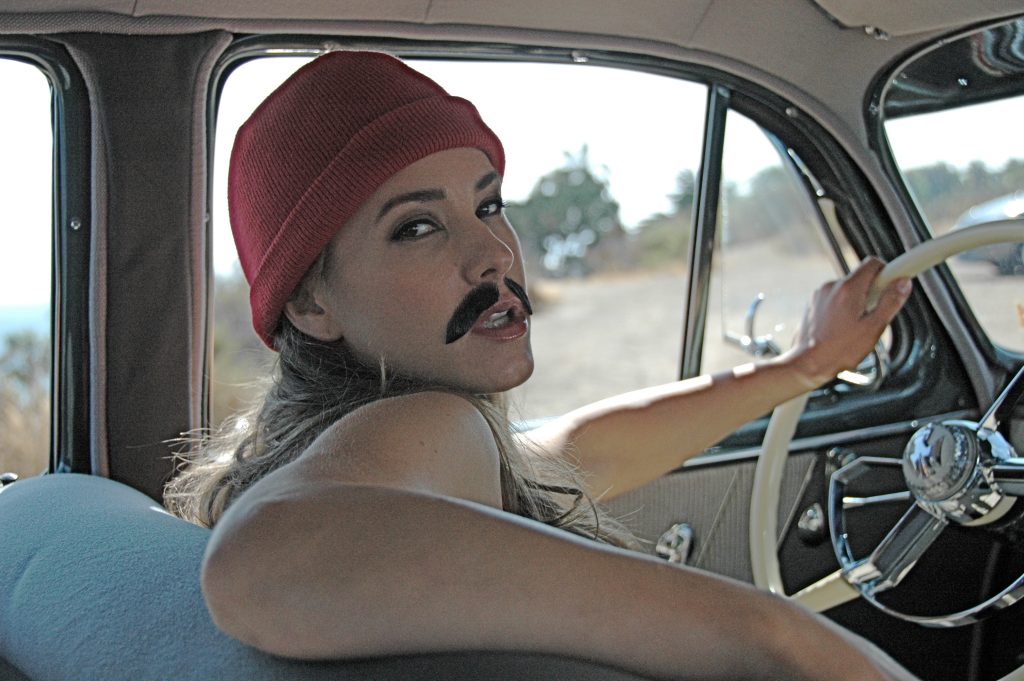
[Laughs] Cheech and Chong at some point had a reunion tour, and we were in Australia or Canada, and after the show, his Pedro costume was laying in the hotel room and I was like, wow, this is too tempting, and I put it on. When we came back from the tour, my childhood friend, who is a fashion blogger, suggested we do a photo shoot. Cheech and Chong impersonation photos are a big thing.
Where did you get the lowrider?
The photographer! He was so inspired by the whole idea that he brought it and we were like, if we’re going to do it, let’s do this thing. We parked it right off of PCH where Up in Smoke was shot, right by the house that we used to live in, in Malibu. It was all just kind of spontaneous.
Your marriage is definitely an interesting collaboration!
It is. We have an age difference, we have a difference of background, so what he does, he does on his own, but we both have some kind of arts background that we connect to in daily life. If there were no interest in the arts, I think it could fewer points of connection.
And the two worlds certainly meet in the Marin Salon series you created.
It started around 2012 or 2013 and was about connecting our backgrounds in arts and music. Essentially, it started from his close connection to the artists, and the musicians on my end, and we figured that it could be a good blend of those different realms. They’re private events. We usually invite a musician and an artist to our home, and there’s a music performance with some kind of presentation from the visual artist. Sometimes, we collaborate with different organizations and causes, depending on what it is.
This also seems to tie into your love of music education, equity and accessibility.
Before we started doing the salons, I didn’t realize there is a huge segment of the population who didn’t have that classical music background because it was the only thing I knew. So, it definitely informed my mind about what genre is, and how accessible music is or is not. Music, whether it’s classical or electronic or something else, is one of the most essential ways that we as humans communicate. The most important thing is that people receive it, because it’s a message we all need.