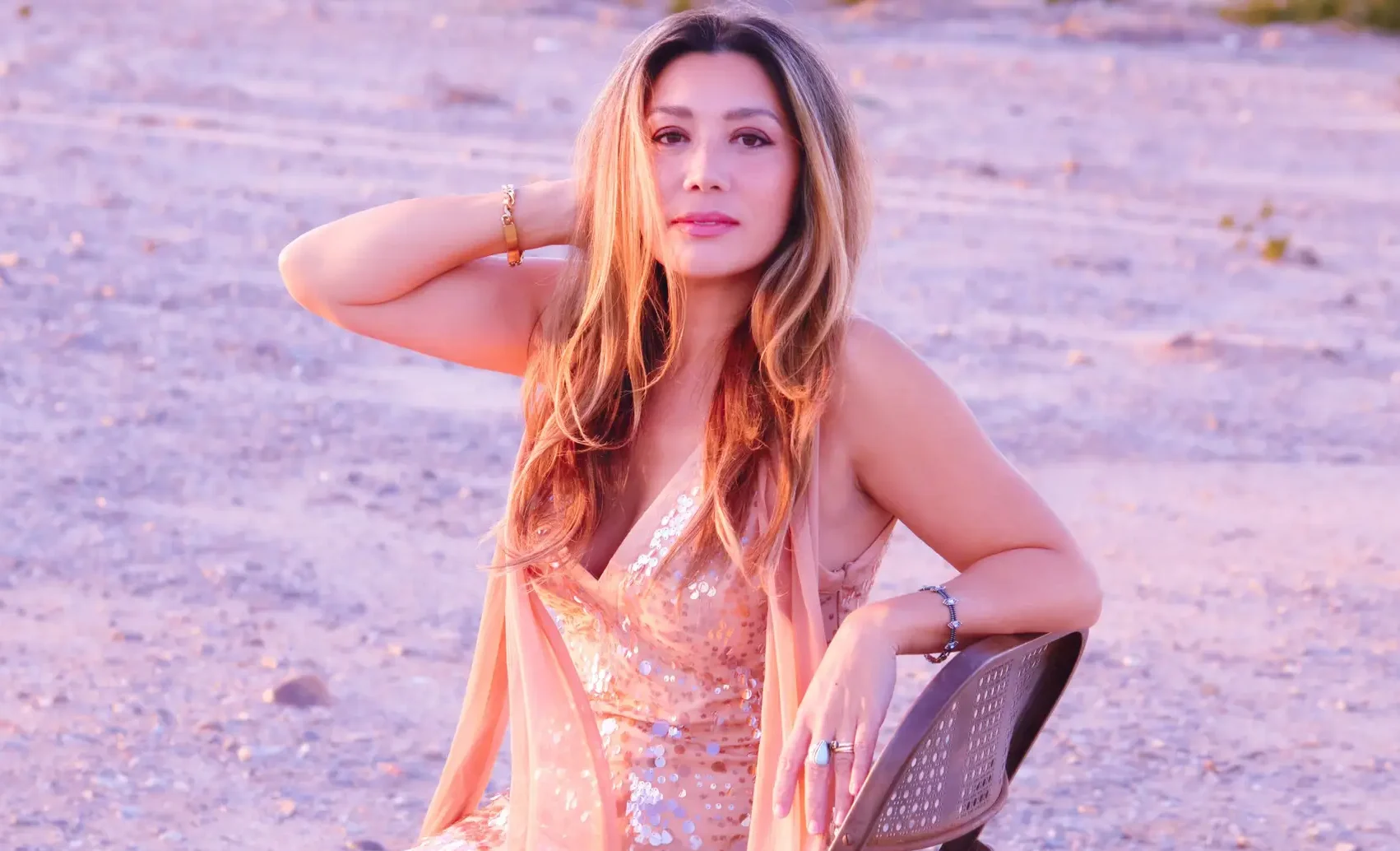
Canadian-Filipino born songstress Tara Beier is a true standout within our prolific, artistic desert community. Born in Vancouver British Columbia, Beier hails from a musical background—her great-grandfather was a pianist in Victoria, and, from an early age, Beier exhibited solid signs of this lineage when she began playing classical piano at age 5. Ten years at the Royal Conservatory of Music cemented this genetic drive and also inspired her to write the Native rights docudrama, Covered, in which she portrays legendary singersongwriter activist Buffy Sainte-Marie. But music will always be Beier’s first love.
Her latest single, “Desert Soul” is an extension of her most recent album Mourning Doves of Joshua Tree, produced by Steve Stout of Nashville. “From the beginning, my producer Steve Stout immediately understood my sound and artistic vision,” Beier says. “Together, we created something that felt both grounded and expansive that we are both very proud of.”
Mourning Doves of Joshua Tree was released in 2025 on Manimal Records, produced by Stout and engineered by Alex Williams at The Village Studios in Los Angeles and Pat Kearns at Goat Mountain Recording. The release quickly received strong national attention in Rolling Stone, Billboard and Paste Magazine. Immediately following the album’s release, the Tara Beier band performed at The Whisky, Pappy & Harriet’s, The Troubadour and the Morongo Valley Music Festival. Mourning Doves of Joshua Tree was also placed on the Grammy ballot for Best Americana album 2025.

“As a Filipino-American artist, I’m honored to be among the first Asian American voices represented in this category,” Beier says. “That representation means so much to me. I’m deeply thankful for the love and support it has brought.” The album was also well received by The Recording Academy voting members as a “stand-out and reputable independent release.”
“Each song,” Beier explains, “seems to resonate deeply with listeners, affirming its impact and authenticity.”
“The Desert Soul (Remix)” was released in February 2026 and came about through a reunification with Steve Stout that ended shaping the song into a modern, New Age track with an electronic feel that invites movement, dance, and a renewed sense of play while honoring the spirit of the original mix. Currently, she is collaborating on her new song, “No More War (Flower to the Gun).”
Beier describes her relationship with the desert as “deeply personal and profoundly healing.” She purchased a home in Landers nine years ago that has since become her sanctuary and place of peace—a refuge away from the intensity of Los Angeles.
“There’s something about the silence of the desert that is immediately transformative. The stillness, the vastness, the sense of being on another planet creates a space where I could truly hear myself and begin to heal,” she says. After the birth of her twin boys and following the passing of her grandmother, she and her family lived in the desert for close to a year. “During that time, my twins were two years old. I was navigating postpartum while processing deep grief.”
Beier explains that living in the desert through all the seasons has allowed her “to connect deeply with the elements—the air, the land, and the rhythm of nature. The environment supported my healing physically, emotionally, and spiritually.
The clean air, the quiet, and the simplicity of daily life has helped restore my body and calm my mind.” And that’s when and where she found herself writing Mourning Doves of Joshua Tree. “Every song emerged directly from my experience of living in the desert.”
The album is filled with metaphors and imagery drawn from the landscape, its beauty, its solitude, and raw honesty. Beier describes how she felt the inner pulse of the desert coming through in her music.
“It was as if the land itself had a voice that guided my writing. The desert helped me process grief; it strengthened me and brought me closer to a deeper sense of spirituality.
There is something about the way the earth, sky, and silence converge there that opens a doorway—to reflection, to healing, and to a stronger connection with God and the unseen. The desert didn’t just inspire the album, it shaped it. The desert remains a sacred place for me, one that I hope will continue to offer beauty, grounding, and inspiration for generations to come.”
To sum up Beier’s relationship with the desert, she quotes Ameen Rihani: “In the desert, you become a discoverer. You discover your soul, which had been submerged in vain pursuits, which had been lost in the coils and toils of modern life. You discover your kinship with nature and man, which is evoked by the naturalness and the gentle humanity of the natives of the desert, and you will also discover God.”