A Tour of Hi-Desert Music Studios
by Natasha Brie Beranek
The whole of nature is a metaphor of the human mind. – Ralph Waldo Emerson
There is an intangible force behind Hi-Desert artistry. Musicians who live and work here speak of awe, humility, and the desert’s “magic.” Like Ralph Waldo Emerson, they experience nature as something sublime and reflective—a landscape that mirrors the inner world.
“There is something about the panoramic view,” says Christopher Thorn, owner of Fireside Sound in Joshua Tree. “It’s profound. There’s just this ‘x’ factor that delivers. People don’t usually want to write songs in the studio—it’s scary when you’re paying by the hour. But out here, you can hear yourself think.”
The desert’s quiet and vastness strips away distraction. Removed from the churn of social media and the relentless economics of Los Angeles, artists slow down. “In LA, your rent is five times more, so your hustle has to be five times more,” Thorn explains. “Here, you can make more pure art. In LA, you feel like the center of the universe. Then you come to Joshua Tree and realize you’re a speck of dust on a ball floating through space.”
Still, relocating to the Hi-Desert is more than a weekend escape. What compels established musicians to build their lives here?
Fireside Sound
Christopher Thorn—guitarist for Blind Melon and The Afghan Whigs—began visiting the desert in 2007. Through touring, he met Dave Catching of Kyuss. “For the record, none of us would be here if not for Dave,” Thorn says. “He’s the pioneer.”
Early visits to Catching’s studio felt different from LA sessions—more communal, less pressured. Thorn brought an acoustic guitar and journal. “I wrote more songs in those first few years than I did in twenty years in LA.” Each drive up the hill toward the windmills brought calm. “When we found a place out here, it was life-changing.”
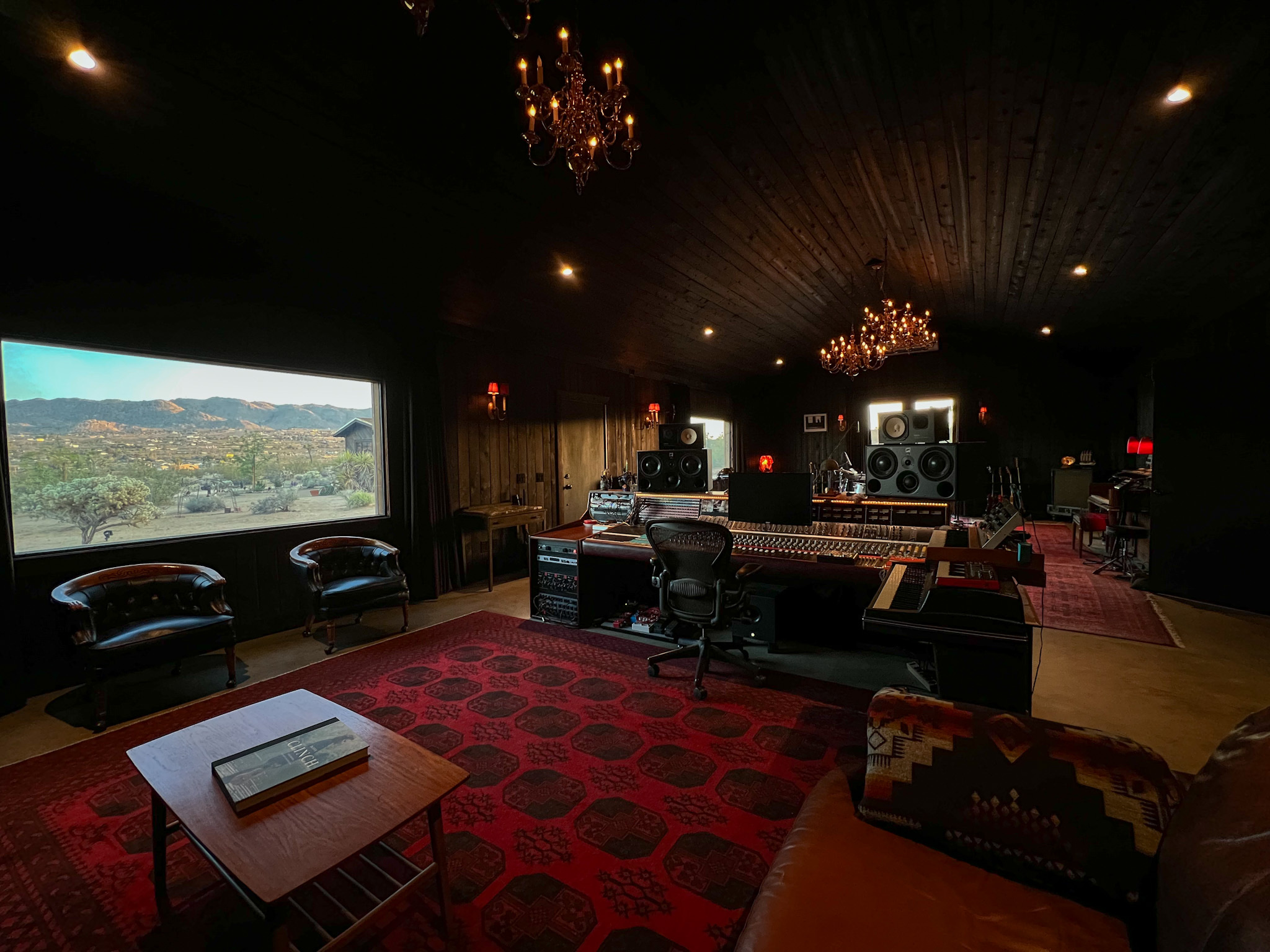
Fireside Sound, like Catching’s Rancho de la Luna, is hybrid—analog warmth fused with digital precision. Thorn gestures toward his 1973 API mixing desk, prized for its punchy, “fat” sound. “I work with a lot of kids who make records in their bedrooms,” he says. “But can you make the best record in your bedroom? No. They want to run it through this gear and fortify what they’ve been working on.”
Inside, the studio feels intimate—dark paneling, Chesterfield sofas, Southwestern blankets. A framed 1993 Rolling Stone cover featuring Blind Melon hangs nearby alongside shelves of rock biographies. The room feels like a sanctuary against the blaze outside.
Rancho de la Luna
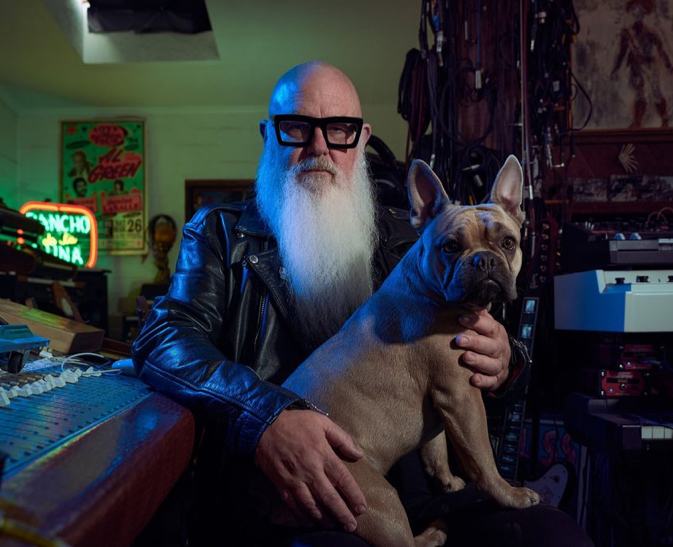
Despite Dave Catching’s status as the “OG” of Hi-Desert music production, he is strikingly humble about the legacy he has created. “I’m just happy that people still wanna come out and make music!” he says, his exuberant French Bulldog, Chunk, making circles around the coffee table as we chat.
It would take days to fully absorb the studio’s offbeat tchotchkes—a Howdy Doody head, colorful feathers, an empty bag of Cardi B-themed potato chips, an Alabama license plate reading “QOTSA” hanging next to a rack of cowboy hats. The pièce de résistance is a guitar fashioned out of a bedpan.
“Out of all the arts,” Catching continues, “music has suffered the most. The business has always been pretty rough, but when streaming happened, everything got more expensive—gas, touring, instruments—and no one’s making money. It would be easy for everybody to say, “fuck it,” but people still save up money and come here to make great music.Ultimately, you make music because you have to.”
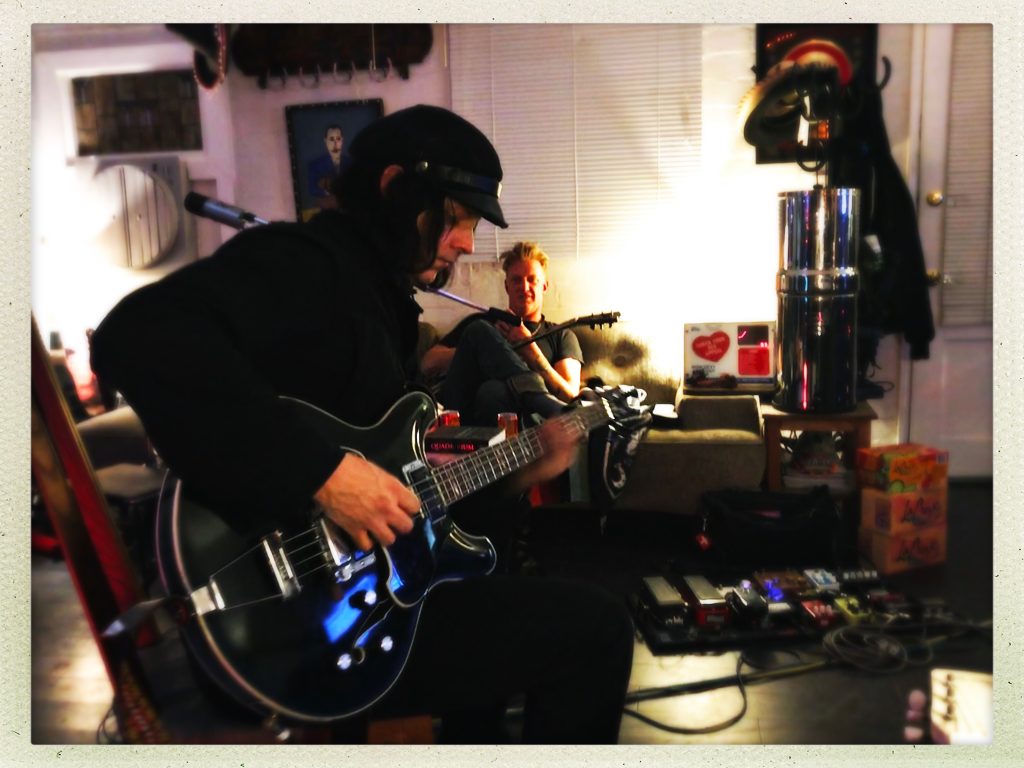
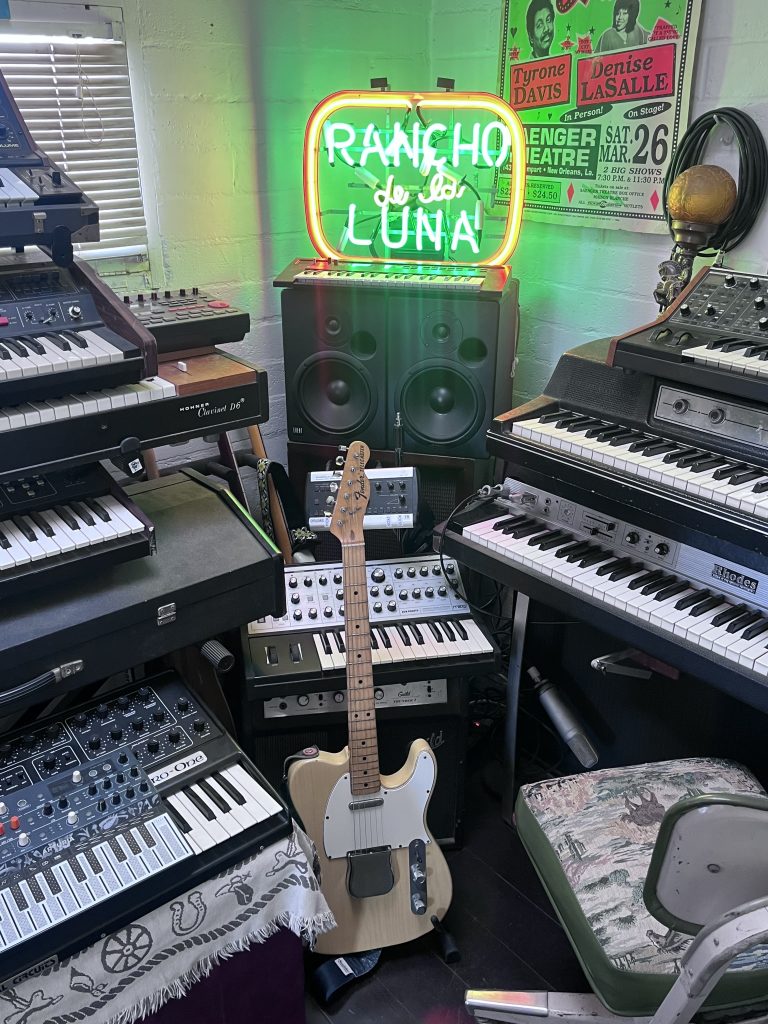
Catching founded Rancho with Fred Drake in 1993. And he echoes Thorn’s reasons for moving here: the desert’s magic, its relative affordability and lack of distractions, and its sense of community. His neighbors include his QOTSA/ Kyuss colleague, Patrick “Hutch” Hutchinson, Eagles of Death Metal’s Brian O’Connor, singer-songwriter Victoria Williams, and his business partner in Rancho de La Luna mezcal, Bingo Richey.
Catching acknowledges the lure of “desert rock” to those who make the trek to his
studio. “When my friend Chris Goss, who produced Kyuss, first shared their record, he told me, ‘I’m going to make them sound bigger than God!’ I’ve worked with Chris a lot, so I know how to get those heavy sounds.” In addition to Queens of the Stone Age, artists who have recorded at Rancho include Foo Fighters, Arctic Monkeys, and The Desert Sessions musical collective.
Dennis Moody
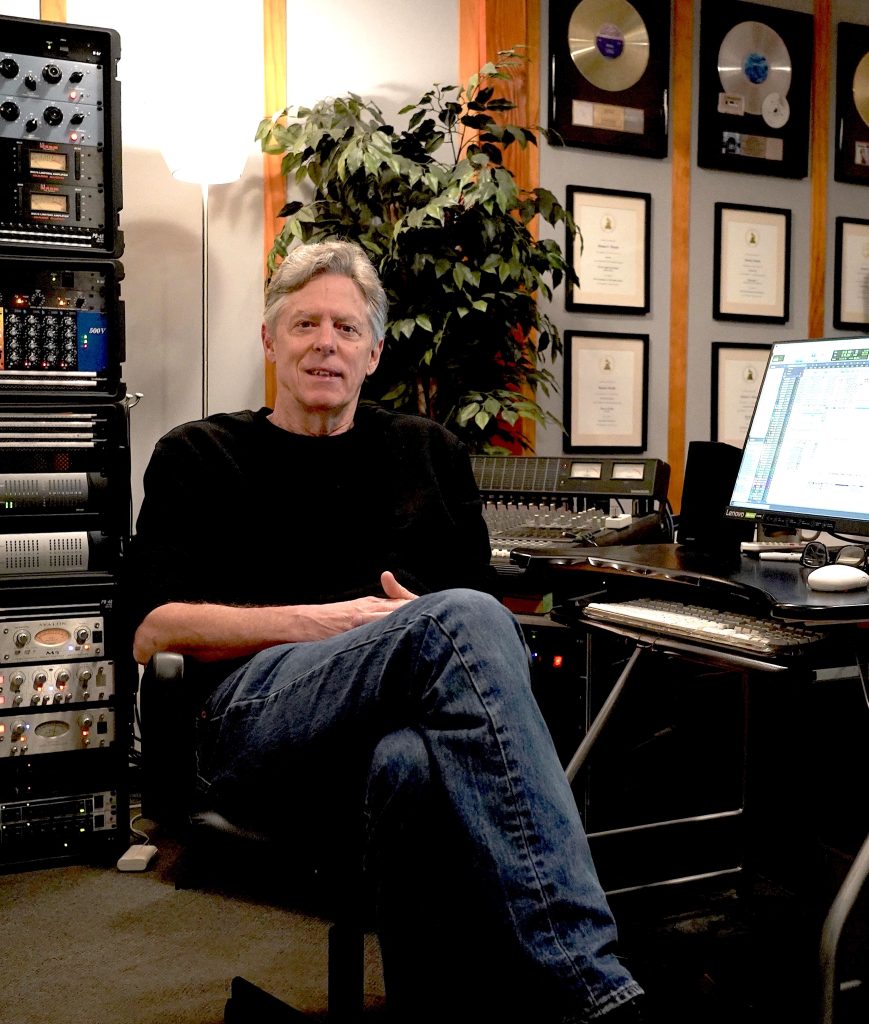
Producer Dennis Moody’s resume spans Missy Elliott, Miles Davis, Aerosmith, and Iggy Pop. Unlike Catching, he struggled at first to lure colleagues east. “They’d say, ‘We don’t want to come out there and work!’” he laughs. “They wanted to recharge, hike, drink beer.”
Eventually, Moody understood: the desert’s value lies in clarity. Rather than importing outside acts, he invested locally, working with regional artists and helping them realize their creative visions. “That’s what’s important to me.”
Gatos Trail Recording Studio
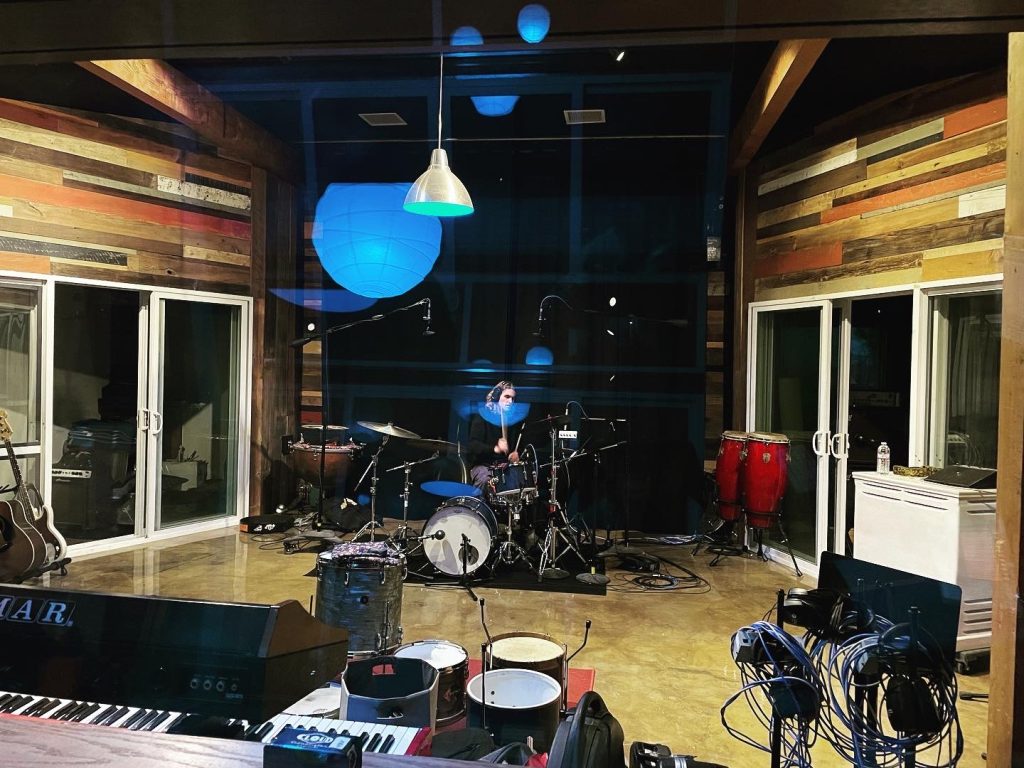
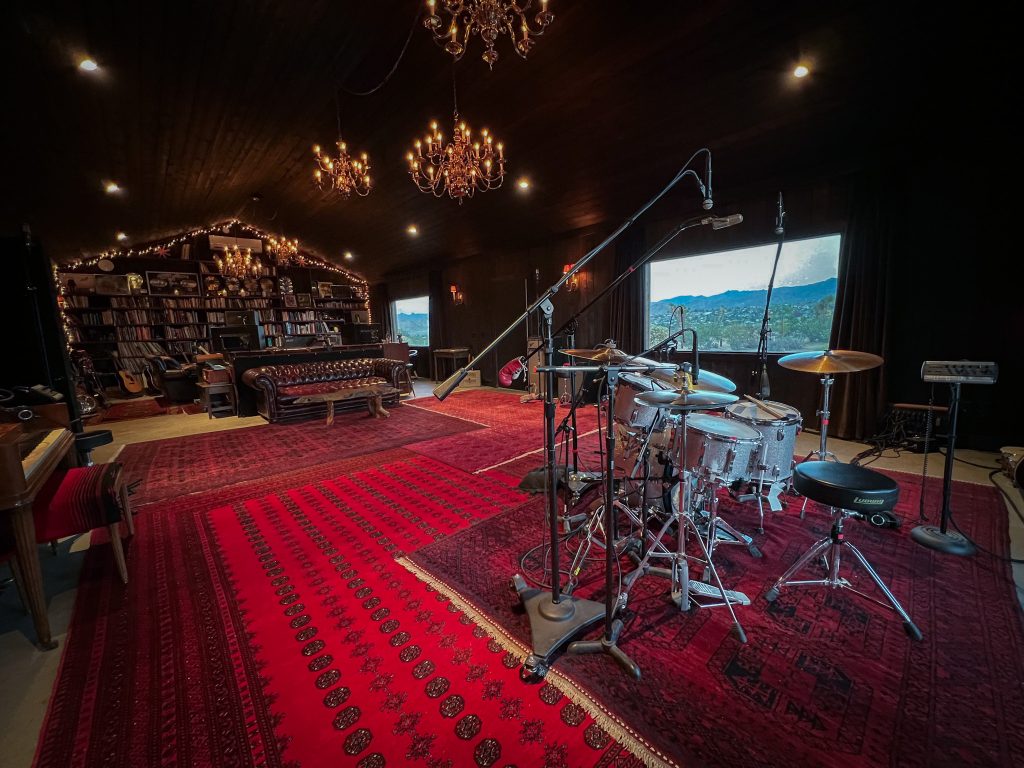
Founded in 2015 by Dan Joeright, Gatos Trail is known for its drum room and onsite lodging. Joeright, a graduate of Berklee College of Music, first came to the Hi-Desert out of curiosity. “I grew up in Ohio—it felt like the moon.”
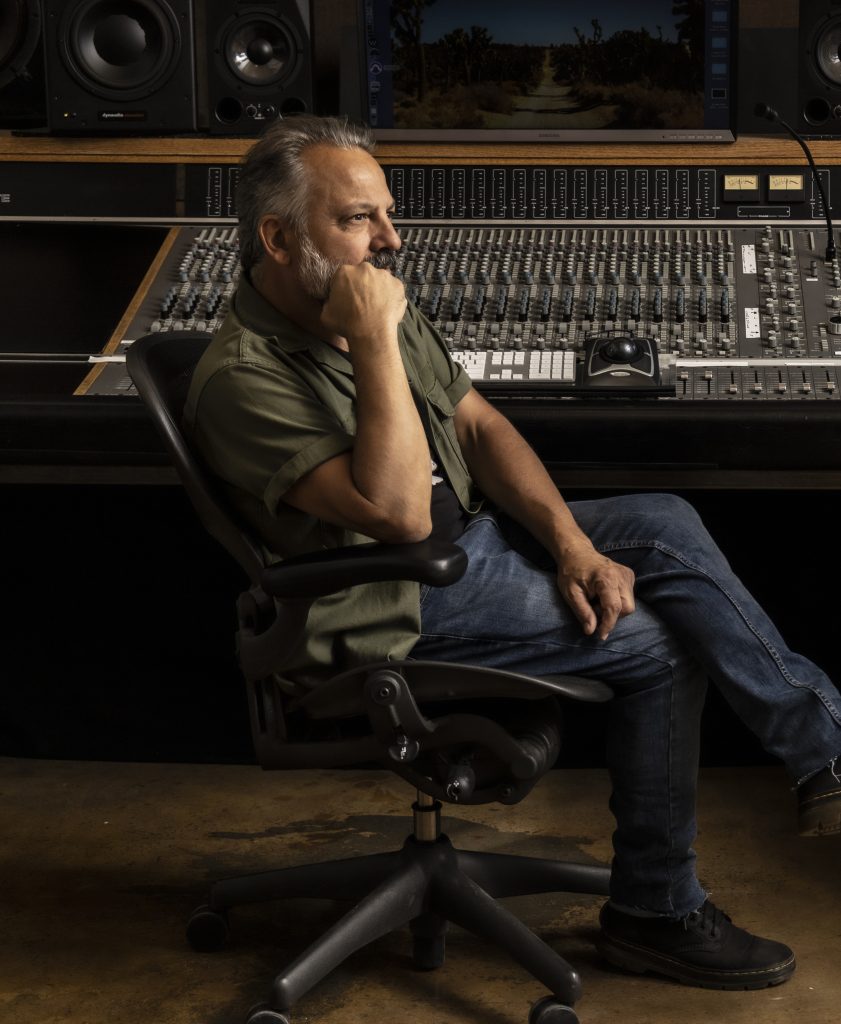
Photo by Mark Maryanovich
He later recorded the Live From the Mojave collection during the pandemic, capturing performances at a natural desert amphitheater before mixing them back at the studio. Wind toppled mic stands, sand threatened equipment. “Another desert experience for the books,” he says.
Opening Gatos Trail felt risky. “I was nervous no one would come. But I kept thinking, if I love it here this much, someone else will, too.” He describes the area’s pull as a “creative magnetism” strong enough to draw things from artists they might not access elsewhere.
Potato Alligator Studio
Patrick “Tricky” Mitchem moved to the desert as a child and never lost his sense of wonder. “There’s a rawness here,” he says. “People aren’t trying to overimpress. They’re here to create.”
His Morongo Valley home studio—named after his rescue bulldog Ruthie—uses different rooms for different sonic textures. “If it feels too much like a professional studio, artists get intimidated. Sometimes all you need is a warm chair and a studio dog.”
Mitchem came of age alongside Kyuss and the ‘90s desert rock scene, but his work now spans genres. He performs weekly in Indian Wells and teaches at a non-profit providing contemporary music education to Coachella Valley Youth. Flexibility, he says, is key. “For 20 years, everyone’s called me ‘Tricky’ because I can do so many different things.”
Coyote Run Studio
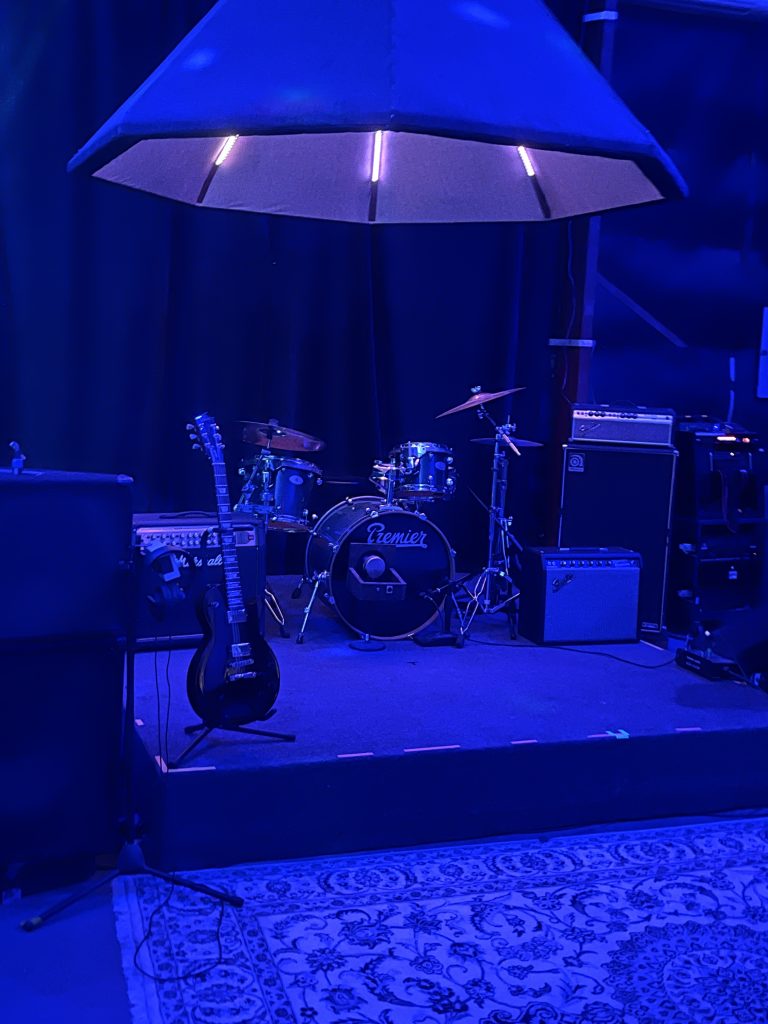
Ian Stahl and Dan Friedman represent a younger wave of Hi-Desert studio owners. Friedman, trained in theoretical computer science, initially moved from Silver Lake to Joshua Tree for space to build and experiment. Together, they launched Coyote Run as a studio, live sound company, and event venue.
“There’s no record label coming to save us,” Stahl says. “We have to be multi-faceted.”
That DIY ethos mirrors the broader community. “People here give themselves permission to try things,” Stahl observes. Friedman agrees: “There’s no specific genre. It’s accepting of all expressions.”
Stahl calls Joshua Tree “the Laurel Canyon of the 2020s”—an affordable, collaborative haven reminiscent of another era. Coyote Run has hosted eclectic events, from hybrid music-and-gaming festivals to international collaborations and socially conscious projects.
Goat Mountain Recording
Pat Kearns, host of Z107.7’s Local Music Showcase, sees the desert’s diversity firsthand. “There are different scenes here,” he says. “Unexpected collaborations are when music gets interesting.”
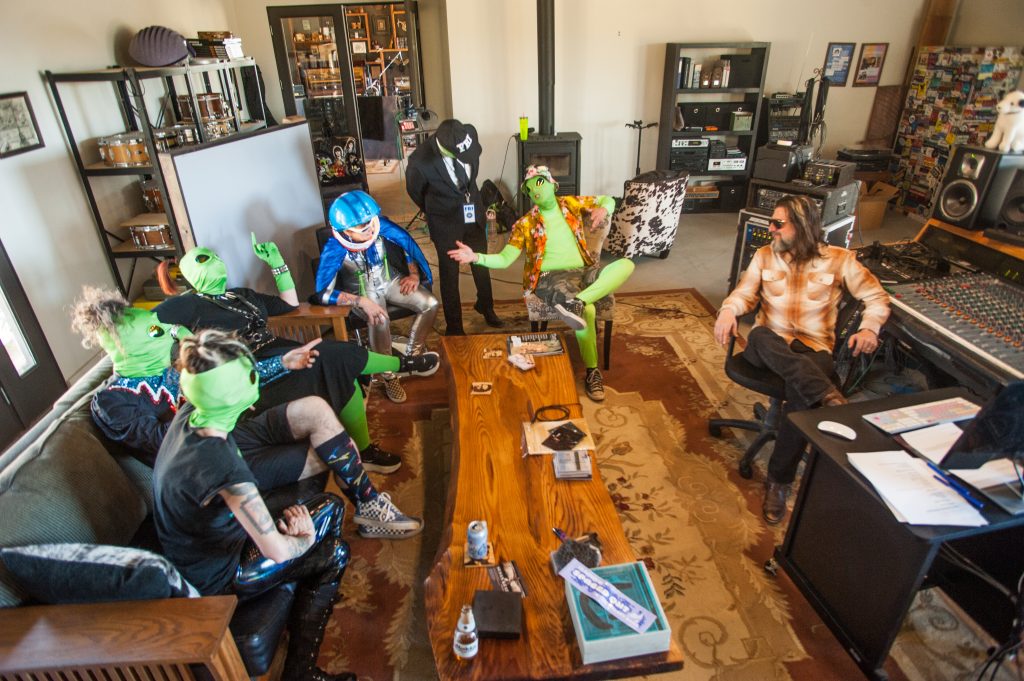
After working in Seattle and Portland during and after the grunge era, Kearns relocated to the Hi-Desert, drawn partly by economics and partly by possibility. Goat Mountain Recording opened in Landers in 2020 and runs off solar power—an off-grid studio pairing vintage analog equipment with modern converters.
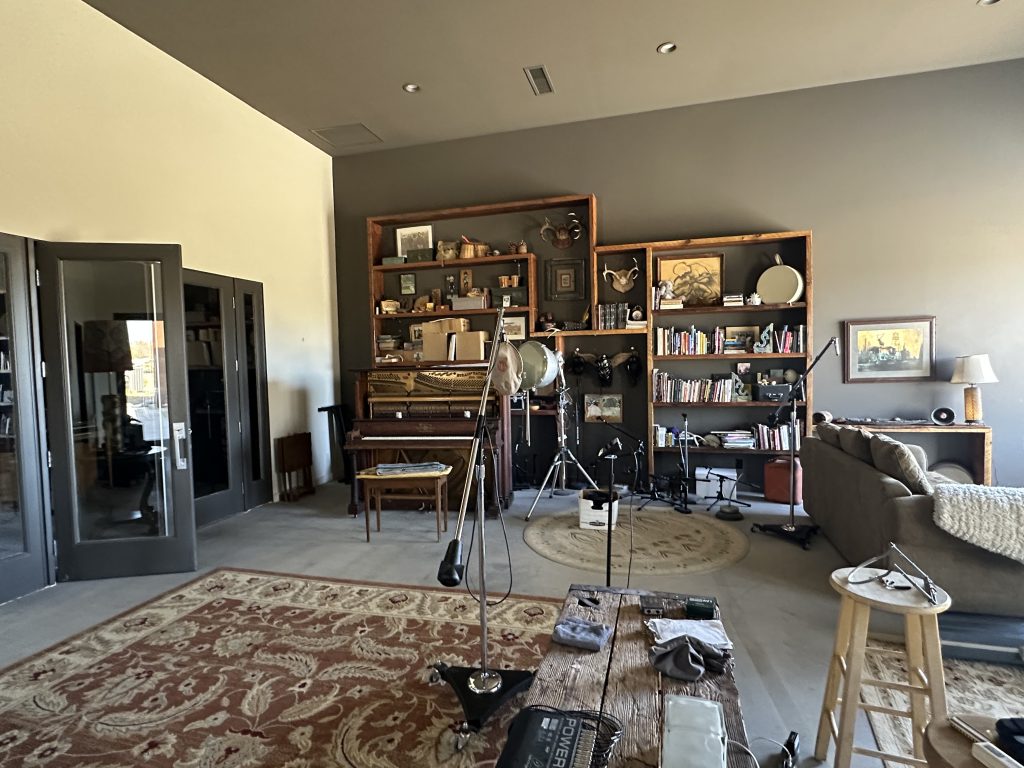
“The quiet out here lets you hear what’s already in your head,” Kearns says.
Songs Buried in the Sand
Toward the end of our conversation, Thorn shares a story. Bruce Springsteen once visited Fireside Sound for an album cover shoot and documentary work. Thorn joked that songs were buried all over the property. “You can come grab them anytime,” he told him. Springsteen nodded. “I know.”
And that’s how Joshua Tree feels to those who create here. The songs are waiting—in the silence, in the wind, in the vastness. You only have to slow down long enough to hear them.